



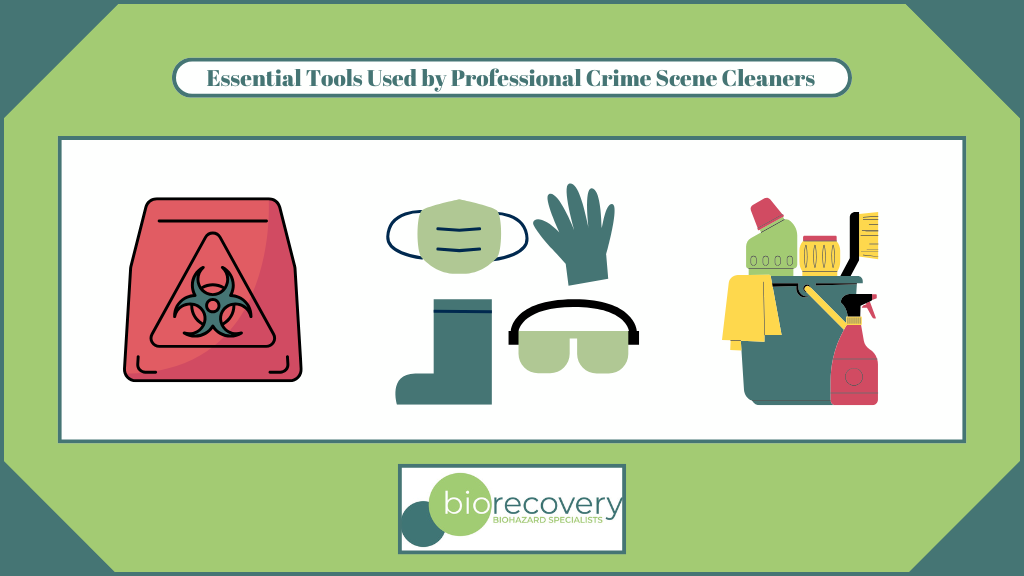
When a tragedy occurs, the work of law enforcement is often just the beginning of the story for the affected property. A specialized team must step in to handle the difficult and hazardous task of remediation once the investigation concludes. Professional crime scene cleaners use essential tools to safely and effectively restore a scene, removing all traces of biohazardous materials. Learn more about the precision and care required for this critical job.
Personal Protective Equipment (PPE)
Cleaning technicians use personal protective equipment (PPE) to create a complete barrier between themselves and the environment. This includes full-body biohazard suits, which are often sealed at the wrists and ankles with tape to prevent gaps.
Technicians also wear double-layered gloves, waterproof boots, and full-face respirators with specialized filters. Respirators prevent the inhalation of airborne bacteria, viruses, and noxious odors. This comprehensive gear ensures that cleanup specialists can work safely without risking their own health.
Industrial-Grade Cleaning Agents
Standard household cleaners are not sufficient for the unique challenges of crime scene cleanup. Professionals use powerful, hospital-grade disinfectants and enzymatic cleaners specifically formulated to break down biological materials. These agents are capable of killing resilient pathogens like HIV, hepatitis B and C, and other bloodborne viruses.
Enzyme-based solutions are particularly effective for blood cleanup because they chemically break down proteins in bodily fluids. This process cleans visible stains and eliminates odors at their source. Technicians are trained to select the appropriate chemical for each specific surface to ensure thorough sanitation without causing damage.
Specialized Application and Removal Tools
Applying and removing cleaning agents requires a specific set of tools to ensure every affected area is reached. Professionals use sprayers to evenly distribute disinfectants and foggers to decontaminate the air and hard-to-reach surfaces. These methods ensure that even microscopic droplets of hazardous material are neutralized.
For removal, technicians use absorbent materials like disposable towels and medical-grade sponges. Squeegees are used on hard surfaces to collect liquids, while industrial wet/dry vacuums equipped with HEPA filters safely contain contaminated fluids. Each tool is chosen for its ability to contain and remove biohazards without cross-contamination.
Chemical Cleanup Equipment
Crime scenes can involve a variety of hazardous chemicals, depending on the circumstances. These may include industrial solvents, toxic substances like mercury, or drug residues such as methamphetamine byproducts. Additionally, investigators often use chemicals such as fingerprint powders, luminol, and other forensic agents, which can leave residues that require careful removal.
The cleanup process begins with identifying the chemicals using detection tools, followed by isolating the area to prevent cross-contamination. To safely handle these chemicals, professional cleaners use specialized supplies like chemical-neutralizing agents, absorbent pads, and spill containment kits. Cleaners then decontaminate surfaces with industrial-grade cleaning solutions and HEPA-filtered vacuums.
Tools for Structural Remediation
Sometimes biohazardous materials seep beyond the surface and into a building’s structural elements. In these cases, cleaners must use tools to remove contaminated portions of drywall, flooring, and subflooring. This may involve using pry bars, saws, and heavy-duty box cutters to access the affected areas.
Once removed, these materials are treated as regulated medical waste and disposed of in accordance with strict federal and state guidelines. Professionals then use sealants and primers to treat the exposed structural components before any reconstruction begins. This step prevents lingering odors and mold growth.
The Importance of Odor Control
Beyond visible cleaning, eliminating odors is a critical part of the remediation process. Foul odors are often caused by bacteria feeding on organic matter, and simply masking them with air fresheners is ineffective. Professionals use hydroxyl generators or ozone machines, which are powerful tools that chemically alter and neutralize odor-causing molecules in the air and embedded in porous materials. This technology ensures that, once the cleaning is complete, the property is free of any distressing, persistent smells.
Safe Biohazard Waste Disposal
Proper disposal of all contaminated materials is a cornerstone of professional crime scene cleanup. Technicians are equipped with specific items to manage this process safely and legally. Regulation-compliant disposal is a crucial step for preventing public health risks.
Here are the essential items for biohazard waste management:
- Red biohazard bags: These are used to collect all contaminated soft materials, including PPE and cleaning cloths.
- Sharps containers: Puncture-proof containers are mandatory for safely disposing of needles, broken glass, and other sharp objects.
- Leak-proof transport containers: All biohazard bags are placed into rigid, sealed containers for transport to a licensed disposal facility.
- Warning labels: Every bag and container must be clearly labeled with the universal biohazard symbol.
- Waste manifests: A legal document tracks the waste from the scene to its final destruction, ensuring a proper chain of custody.
Decontamination and Deodorization Equipment
After the primary cleaning is complete, the final step is to ensure the entire area is decontaminated and deodorized. As mentioned, professionals may use ozone machines or hydroxyl generators. Ozone machines are highly effective but require the area to be completely sealed and unoccupied.
Decontamination can be challenging because biohazards often seep into porous surfaces, making them difficult to fully remove without advanced tools. Without proper equipment, there’s a risk of leaving behind harmful pathogens that can continue to pose health risks. Additionally, improper handling can spread contamination to other areas, compounding the problem rather than resolving it.
Post-Remediation Verification Tools
How do cleaners confirm a scene is truly clean? They rely on testing equipment to verify that decontamination was successful. At BioRecovery, one essential tool we use is ATP testing, which measures adenosine triphosphate, a molecule found in all living cells.
ATP testing works by swabbing surfaces and inserting the sample into a handheld device that provides a numerical reading of biological contamination. ATP testing allows us to verify cleanliness before, during, and after the cleanup process, ensuring no harmful biological material remains. By using this advanced method, we provide clients with peace of mind that their property is safe to use again.
Restoring a scene to sanitary condition is a complex task that requires more than standard cleaning supplies. The essential tools used by professional crime scene cleaners range from protective gear to advanced scientific testing equipment. Each item plays a specific role in protecting technicians, eliminating biohazards, and restoring the property. These tools, combined with extensive training and compassionate customer service, allow professional cleaners to handle traumatic situations with dignity and precision.