



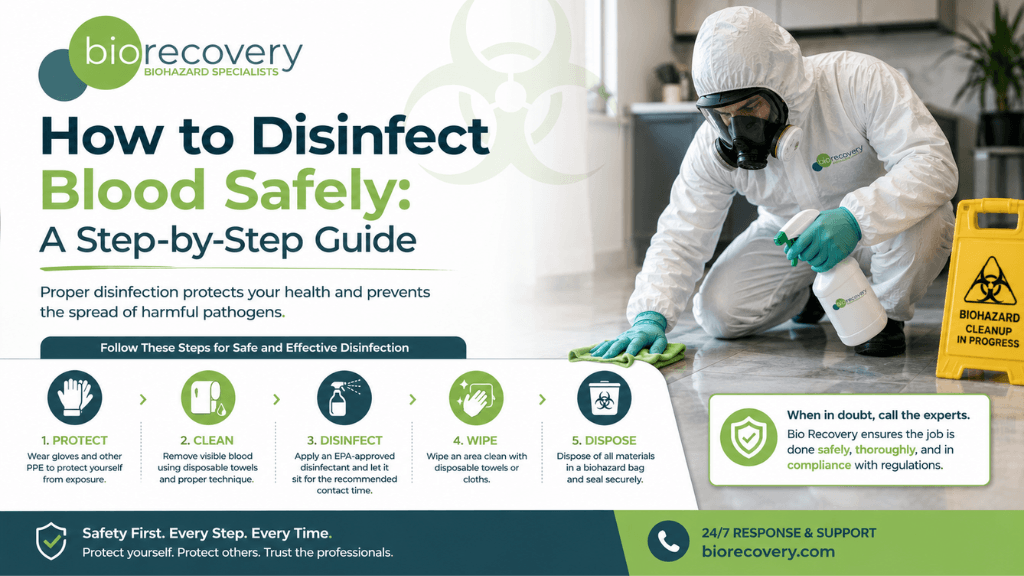
Blood should be disinfected using appropriate personal protective equipment (PPE), an EPA-registered disinfectant effective against bloodborne pathogens, and proper cleaning procedures that prevent exposure and cross-contamination. Even small blood spills can carry infectious risks, so safety precautions are essential before attempting cleanup. This is why knowing how to disinfect blood safely is important.
If the spill is large, involves unknown sources of blood, or includes porous materials such as carpet, mattresses, or upholstery, professional biohazard remediation may be the safest option.
Why Blood Cleanup Requires Special Precautions
Blood can potentially contain harmful pathogens, including:
- Hepatitis B (HBV)
- Hepatitis C (HCV)
- HIV
- Other infectious microorganisms
While the Dangers of Biohazard Exposure varies depending on the situation, blood should always be treated as potentially infectious.
Before You Begin: Safety First
Wear Proper Personal Protective Equipment (PPE)
Before cleaning any blood spill, put on:
- Disposable nitrile gloves
- Eye protection (if splashing is possible)
- Disposable gown or protective clothing (for larger spills)
- Closed-toe shoes
Never handle blood with bare hands.
Gather Cleaning Supplies
You will need:
- Disposable paper towels
- Biohazard or sealable trash bags
- EPA-registered disinfectant labeled for bloodborne pathogens
- Disposable wipes or cleaning cloths
- Additional gloves (if changing gloves during cleanup)
Step-by-Step: How to Disinfect Blood Safely
Step 1: Isolate the Area
Keep children, pets, and other individuals away from the contaminated area.
If possible:
- Close doors
- Restrict foot traffic
- Increase ventilation
Step 2: Remove Visible Blood
Using disposable paper towels:
- Absorb excess blood
- Work from the outside of the spill inward
- Avoid scrubbing aggressively
Place all contaminated materials directly into a sealed disposal bag.
Step 3: Clean the Surface
Before disinfecting:
- Remove any remaining visible residue
- Follow manufacturer instructions for cleaning products
Disinfectants work best on surfaces that have already been cleaned of visible contamination.
Step 4: Apply Disinfectant
Apply an EPA-registered disinfectant according to the product label.
Important:
- Completely cover the affected area
- Allow the required dwell/contact time
- Do not wipe away immediately
The disinfectant must remain wet for the amount of time specified by the manufacturer to be effective.
Step 5: Dispose of Contaminated Materials
Place the following into a sealed bag:
- Gloves
- Paper towels
- Disposable cleaning materials
- Other contaminated waste
Follow local regulations regarding disposal.
Step 6: Wash Hands Thoroughly
After removing gloves:
- Wash hands with soap and water for at least 20 seconds
- Dry using a clean towel
Handwashing remains one of the most important infection-control measures.
Blood Cleanup by Surface Type
Hard Surfaces
Examples:
- Tile
- Vinyl flooring
- Metal
- Sealed countertops
These surfaces are generally easier to disinfect because blood remains on the surface.
Carpet and Rugs
Blood can penetrate:
- Carpet fibers
- Padding
- Subflooring
If blood has soaked deeply into carpeting, complete remediation may require removal of affected materials.
Upholstery and Mattresses
Porous materials can absorb:
- Blood
- Bodily fluids
- Odors
Professional evaluation is often recommended because contamination may not be visible below the surface.
Common Mistakes to Avoid
Using Household Cleaners Alone
Not all cleaners disinfect.
A product should specifically indicate effectiveness against bloodborne pathogens when appropriate.
Skipping PPE
Gloves and protective equipment help reduce the risk of exposure during cleanup.
Cleaning Before Disinfecting
Visible contamination should be removed first so disinfectants can work effectively.
Rushing Contact Time
Disinfectants require a specified amount of wet contact time to achieve effectiveness.
When to Call a Professional Biohazard Cleanup Company
Professional blood spill cleanup may be appropriate when:
- Blood covers a large area
- The source of the blood is unknown
- Blood has penetrated porous materials
- There is a potential infectious disease concern
- The cleanup involves a trauma, crime scene, or unattended death
At Bio Recovery we follow a strict biohazard removal process using specialized equipment, containment procedures, and disposal methods that are not available to the general public.
Key Takeaways
- Treat all blood as potentially infectious.
- Wear gloves and appropriate PPE before cleaning.
- Remove visible contamination before disinfecting.
- Use EPA-registered disinfectants according to label directions.
- Allow proper contact time for effective disinfection.
- Seek professional assistance for large, complex, or high-risk situations.
Frequently Asked Questions
Is it safe to clean blood yourself?
Small, isolated blood spills may be cleaned safely when proper PPE, disinfectants, and procedures are used. Larger or unknown-source spills may require professional remediation.
What disinfectant kills bloodborne pathogens?
Use an EPA-registered disinfectant and follow all manufacturer instructions regarding application and contact time.
Can blood soak through carpet?
Yes. Blood can penetrate carpet fibers, padding, and even subfloor materials depending on volume and exposure time.
Do I need to remove carpet after a blood spill?
Not always. Minor spills may be treatable, but extensive contamination often requires removal of affected materials.
How long can pathogens survive in dried blood?
Survival varies depending on the organism, environmental conditions, and surface type. Blood should always be treated as potentially infectious regardless of appearance.
When should I hire a biohazard cleanup company?
Consider professional remediation when contamination is extensive, involves porous materials, or presents potential health risks.
Call For More Information
Cleaning after a blood spill can be overwhelming, please contact Bio Recovery if you need help. We are highly experienced and trained to assist with you all of your needs.
Share this Post