



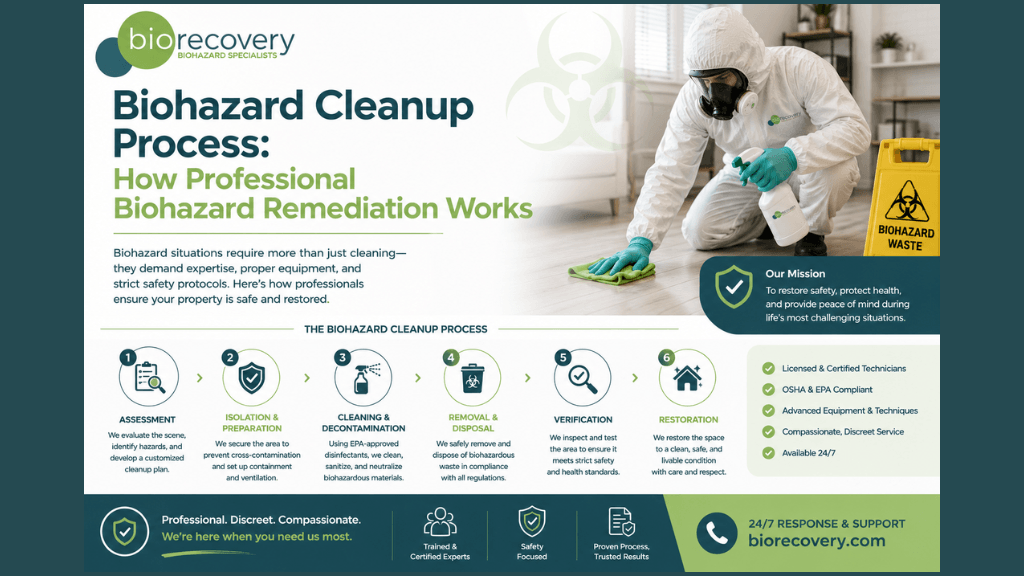
The biohazard cleanup process involves assessing the contaminated area, establishing containment measures, removing hazardous materials, cleaning and disinfecting affected surfaces, disposing of regulated waste, and verifying that the area has been safely remediated. Professional biohazard remediation follows strict safety procedures designed to reduce exposure risks and restore a safe environment.
While every situation is unique, most biohazard cleanup projects follow a structured process that prioritizes health, safety, and regulatory compliance.
What Is Biohazard Cleanup?
Biohazard cleanup is the process of safely removing and remediating biological contaminants that may pose health risks.
Examples include:
- Blood and bodily fluids
- Crime scene contamination
- Trauma scenes
- Unattended death cleanup
- Decomposition remediation
- Infectious disease contamination
- Hoarding situations involving biological waste
Unlike ordinary cleaning, biohazard remediation requires specialized procedures, equipment, and disposal methods.
The 7-Step Biohazard Cleanup Process
Step 1: Site Assessment and Safety Evaluation
The first step in the biohazard cleanup process is evaluating the scene.
Technicians assess:
- Type of contamination
- Extent of exposure
- Affected materials
- Safety hazards
- Potential structural impact
The assessment helps determine the scope of work and the appropriate remediation strategy.
Objectives
- Identify contamination zones
- Evaluate health risks
- Develop a cleanup plan
- Determine PPE requirements
Step 2: Establish Containment
Before cleanup begins, technicians isolate the affected area to help prevent cross-contamination.
Containment measures may include:
- Physical barriers
- Restricted access zones
- Protective coverings
- Controlled work areas
In larger projects, advanced containment systems may be used to help protect unaffected portions of the property.
Why Containment Matters
Without proper containment, contaminants may spread to other rooms or surfaces during remediation.
Step 3: Personal Protective Equipment (PPE)
Professional technicians wear appropriate PPE before entering contaminated areas.
Depending on the situation, PPE may include:
- Disposable gloves
- Protective coveralls
- Eye protection
- Face shields
- Respiratory protection
- Shoe coverings
PPE helps reduce exposure to potentially infectious materials.
Step 4: Removal of Contaminated Materials
The next phase involves removing materials that cannot be safely cleaned or restored.
Examples may include:
- Carpet
- Carpet padding
- Drywall
- Insulation
- Upholstered furniture
- Porous building materials
Materials are carefully removed and handled according to applicable regulations.
Common Situations Requiring Material Removal
- Blood penetration into flooring
- Advanced decomposition
- Severe contamination
- Persistent odor infiltration
Step 5: Cleaning and Disinfection
Once contaminated materials have been removed, technicians clean and disinfect all affected surfaces.
The cleaning process generally includes:
Initial Cleaning
- Removal of visible contamination
- Surface preparation
Disinfection
- Application of approved disinfectants
- Adherence to manufacturer contact times
- Treatment of affected surfaces
Detailed Cleaning
- Addressing hard-to-reach areas
- Cleaning adjacent surfaces as necessary
The goal is to reduce contamination and restore sanitary conditions.
Step 6: Odor Remediation and Decontamination
Certain situations—particularly unattended deaths and decomposition cases—require additional odor treatment.
Odor remediation may involve:
- Deep cleaning
- Specialized odor neutralization methods
- Air treatment technologies
- Treatment of porous materials
Odor control is an important part of restoring the property to a usable condition.
Step 7: Waste Disposal and Final Verification
The final phase of the biohazard cleanup process involves:
Waste Disposal
Contaminated materials are packaged and disposed of according to applicable regulations.
Examples include:
- Biohazard waste
- Contaminated PPE
- Disposable cleaning materials
- Other regulated waste
Final Inspection
Technicians verify:
- Cleanup objectives have been completed
- Affected areas have been remediated
- The property is ready for restoration or occupancy
Documentation may also be provided when appropriate.
How Long Does the Biohazard Cleanup Process Take?
The timeline depends on the severity of contamination.
| Situation | Typical Timeframe |
| Minor blood cleanup | Several hours |
| Small trauma scene | 1 day |
| Unattended death cleanup | 1–3 days |
| Advanced decomposition | Several days |
| Large-scale contamination | Multiple days or longer |
Every situation is different, and timelines vary based on the scope of remediation.
What Factors Affect the Cleanup Process?
Several factors influence the complexity of a biohazard cleanup project.
Size of the Affected Area
Larger contamination zones require additional labor and remediation efforts.
Type of Contamination
Different hazards require different remediation procedures.
Examples include:
- Bloodborne pathogens
- Bodily fluids
- Decomposition contamination
- Infectious disease concerns
Structural Impact
Cleanup becomes more complex when contamination reaches:
- Subfloors
- Wall cavities
- HVAC systems
- Insulation
Time Before Discovery
Delayed discovery often increases contamination severity and remediation requirements.
Why Professional Biohazard Cleanup Matters
Biohazard remediation is designed to address health risks that may not be visible to the naked eye.
Professional cleanup helps:
- Reduce exposure risks
- Prevent cross-contamination
- Address hidden contamination
- Support proper waste disposal
- Restore safe conditions
In many situations, specialized expertise is necessary to manage contamination effectively.
Common Types of Biohazard Cleanup
Professional remediation companies frequently respond to:
- Crime scenes
- Trauma scenes
- Unattended deaths
- Suicide cleanup
- Blood cleanup
- Hoarding situations
- Infectious disease contamination
While the underlying process remains similar, each situation presents unique challenges.
Frequently Asked Questions
What is the biohazard cleanup process?
The biohazard cleanup process includes assessment, containment, removal of contaminated materials, cleaning, disinfection, odor remediation, waste disposal, and final verification.
How long does biohazard cleanup take?
Some projects can be completed within hours, while larger remediation efforts may require several days depending on contamination severity.
Why are contaminated materials sometimes removed?
Porous materials such as carpet, drywall, and insulation may absorb biological contaminants and cannot always be safely restored.
Is biohazard cleanup different from regular cleaning?
Yes. Biohazard cleanup involves specialized safety procedures, PPE, regulated waste disposal, and contamination control measures that go beyond standard cleaning practices.
What happens after cleanup is completed?
Technicians typically perform a final inspection, dispose of regulated waste, and prepare the property for restoration or re-occupancy.
Can homeowners perform biohazard cleanup themselves?
Small incidents may be manageable, but significant contamination often requires professional remediation due to health and safety concerns. Learn how to disinfect blood safely.
Key Takeaways
- The biohazard cleanup process follows a structured, safety-focused approach.
- Professional remediation typically includes assessment, containment, material removal, cleaning, disinfection, odor treatment, and waste disposal.
- Every situation is unique, and cleanup requirements vary based on contamination type and severity.
- Proper remediation helps reduce exposure risks and restore safe conditions.
- Professional cleanup is often necessary for trauma scenes, unattended deaths, and significant biological contamination.