



Table of Contents
Large-scale trauma cleanup contains widespread biological contamination, coordinates work across multiple affected areas, and prepares each completed space for restoration. It becomes necessary when blood, bodily fluids, or other hazardous material affects several rooms, floors, vehicles, pieces of equipment, or structural materials that cannot be managed as one small work area.
Bio Recovery’s biohazard cleaning services address extensive contamination in homes, workplaces, vehicles, and public facilities. When that contamination remains after an investigation, our crime scene cleanup services begin once authorities release the affected area.
Each response starts with an assessment of the contamination, property conditions, access restrictions, and operating needs. From there, Bio Recovery establishes controlled work zones, removes affected materials, cleans and disinfects remaining surfaces, manages regulated waste, documents the work, and prepares the property for repair or renewed use.
What Is Large-Scale Trauma Cleanup?
Large-scale trauma cleanup is the coordinated remediation of biological contamination across an extensive area, multiple locations, or a complex property. It differs from a smaller cleanup because it may require several work zones, expanded staffing, controlled travel routes, and phased restoration.
The size of the building alone does not define the project. A scene becomes large-scale when the contamination or operating conditions cannot be managed safely as one contained work area.
Common examples include:
- A workplace accident affecting machinery and nearby production areas
- A violent incident across several rooms in a hotel or apartment building
- A transportation event involving a bus, railcar, aircraft, or fleet vehicle
- A traumatic event inside a school, government building, or public venue
- An incident that produces a large volume of contaminated materials
Large-scale trauma remediation is not the same as general disaster cleanup. Storm cleanup focuses on damage from water, wind, fire, or structural failure. Trauma cleanup addresses blood, bodily fluids, tissue, decomposition materials, and other biological hazards connected to injury or death.
What Makes a Trauma Scene Large or Complex?
Scene complexity depends on how far contamination traveled and what the property needs during remediation. Square footage matters, but it does not tell the whole story.
| Complexity factor | Smaller scene | Large-scale scene |
|---|---|---|
| Affected area | One contained room | Several rooms, floors, vehicles, or structures |
| Site activity | Property can remain closed | Essential operations may need to continue |
| Contamination path | Limited and easy to identify | Multiple paths or hidden spread are possible |
| Project needs | Small crew with limited equipment | Expanded staffing, zoning, logistics, and records |
Fluids can pass beneath flooring, enter wall assemblies, or transfer onto footwear and equipment. A visible incident in one corridor may also affect an elevator threshold, an adjoining room, or a route used by emergency responders.
The site may contain other hazards as well. Sharps, broken glass, damaged structures, chemical residue, or unsafe utilities can change the order of work and the protection technicians need.
Health Hazards in Widespread Biohazard Events
The main concern is contact with blood or other potentially infectious material. Contaminated sharps, damaged skin, and splashes to the eyes, nose, or mouth can create exposure routes.
Covered employers must use controls that eliminate or minimize employee exposure. Exposure plans, training, PPE, and safe work practices are core parts of OSHA biohazard cleanup guidelines when employees may encounter blood or other potentially infectious material.
Larger scenes also create more chances for cross-contamination. People, carts, tools, and waste containers can carry biological material beyond the original area when movement is not controlled.
The CDC’s 2024 environmental cleaning guidance describes blood and body-fluid cleanup as a two-step process: clean first, then disinfect. Although written for healthcare settings, its guidance on PPE, immediate spill control, clean-to-dirty movement, and disinfectant contact time shows why the order of work matters.
How Large-Scale Trauma Cleanup Is Coordinated
A complex cleanup needs one plan that defines authority, access, communication, and site operations. Without it, crews can duplicate work, enter unsafe areas, or carry contamination into completed spaces.
Cleanup can begin only after law enforcement or another investigating authority releases the affected area. Once that happens, responsibility for cleaning a crime scene generally shifts to the person or organization responsible for the property, such as an owner, landlord, business, or public agency.
Bio Recovery then confirms the site contact and current property conditions. Depending on the location, the project may require coordination with facility management, security, an insurance representative, or a restoration contractor.
Before work starts, the plan should answer:
- Who can approve the scope and any necessary changes?
- Which entrances and service routes can the crew use?
- Where can supplies, equipment, and waste be staged?
- Which utilities or building systems need special control?
- Can unaffected sections remain in operation?
- Who receives progress updates and completion records?
Privacy is part of that planning. Restricted access, discreet arrival procedures, and limited sharing of scene details help protect the people and organizations connected to the event.
The Large-Area Biohazard Remediation Process
Large-scale trauma cleanup follows a controlled sequence, but separate crews may work in different zones at the same time. The site assessment determines the staffing, equipment, and schedule.
1. Confirm Release and Safe Access
Bio Recovery confirms that the scene is available for remediation and identifies immediate entry restrictions. Work cannot begin in an active investigative area or a location with unresolved structural, electrical, or chemical hazards.
2. Assess and Document the Affected Areas
Technicians inspect the visible contamination and likely paths into adjoining surfaces. They record affected rooms, contents, building materials, access routes, and any condition that may change the scope.
This assessment separates confirmed contamination from unaffected space. It also identifies porous materials, such as carpet, insulation, unfinished wood, or drywall, that may require removal when they cannot be effectively remediated.
3. Establish Work Zones and Controlled Routes
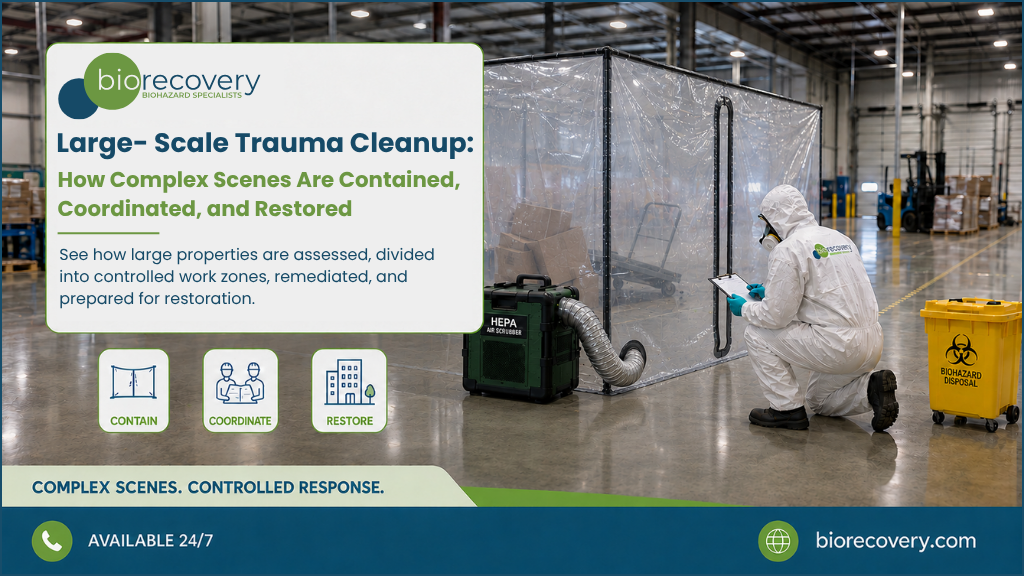
Containment separates the affected area from clean space. At a complex site, the system may extend through several rooms or levels and include dedicated routes for technicians, equipment, and waste.
A large project may use:
- An affected work zone where remediation occurs
- A transition area for changing PPE and decontaminating equipment
- A clean support area for unused supplies and project records
- A waste route that avoids occupied areas when possible
Barriers and signs restrict entry. Supplies are staged to reduce unnecessary movement across zone boundaries, and completed areas are tracked so contaminated equipment does not re-enter them.
4. Remove Biological Material and Unsalvageable Items
Crews remove biological material before addressing the remaining surfaces. Contaminated contents and building components are evaluated by material type, depth of penetration, condition, and available treatment method.
Items that cannot be remediated are packaged for disposal. Sentimental or business-critical property should be identified before removal decisions are finalized whenever scene conditions allow.
5. Clean and Disinfect Remaining Surfaces
Cleaning removes soil and biological material that can interfere with disinfection. Technicians then apply a disinfectant suited to the organism and surface, following the label for dilution, application, safety precautions, and wet contact time.
The EPA’s current disinfectant guidance explains that approved surface types and contact times vary by product. A broad claim such as “hospital-grade” does not replace checking the EPA registration and product label.
6. Control Air and Odor When Needed
Air treatment supports source removal but does not replace it. Technicians first evaluate whether damaged materials, work activity, or building airflow could move particles or odors beyond the affected zone.
HEPA-filtered equipment or air scrubbers may be used when the site plan calls for them. Persistent odor often signals contaminated material that still needs to be located, cleaned, treated, or removed.
7. Package Waste and Verify Completion
Contaminated disposable supplies and removed materials are segregated, packaged, labeled, and moved through the assigned waste route. The U.S. Department of Transportation’s 2022 guidance explains federal classification and packaging rules for infectious substances in transportation, while state and local requirements may add further obligations.
Each completed zone is checked against the defined scope. Records may include photographs, removed-material documentation, waste information, work notes, and a final walkthrough.
Final verification completes the biohazard cleanup process and prepares the property for its next stage of recovery. Remediation addresses contamination, while restoration replaces flooring, drywall, fixtures, or other materials removed during cleanup.
Equipment Used for Extensive Trauma Cleanup
Equipment must match the hazards and containment plan. A large scene often requires more units and backup supplies, but using more equipment does not replace careful source removal.
| Equipment category | Common examples | Primary purpose |
|---|---|---|
| Protective equipment | Gloves, coveralls, eye protection, respiratory protection when required | Reduce technician exposure |
| Containment supplies | Barriers, floor coverings, signs, sealed containers | Separate zones and control movement |
| Cleaning equipment | HEPA vacuums, absorbents, extraction equipment, hand tools | Remove material and clean affected surfaces |
| Waste supplies | Approved bags, rigid containers, labels, sharps containers | Package contaminated waste |
Equipment remains assigned to its approved zone until it is decontaminated or discarded. This prevents a vacuum, cart, or hand tool from carrying material into a clean area.
How Long Does Large-Scale Trauma Cleanup Take?
Large-scale trauma cleanup may take several days or longer. The timeline depends on the affected area, hidden contamination, site access, material removal, waste logistics, and restoration needs.
Several conditions can extend the work:
- Investigators have not released every affected area
- Unsafe utilities or structural damage limit access
- Newly exposed materials expand the contamination boundary
- Specialty equipment or additional disposal arrangements are required
When containment is practical, Bio Recovery may complete sections in phases while keeping them separate from active work zones. A reliable schedule should reflect conditions found during remediation, not a promise made before the assessment.
How Much Does Large-Scale Trauma Cleaning Cost?
Cost depends on the actual scope, not square footage alone. Labor, contamination depth, affected materials, PPE, equipment, waste volume, access limits, and required documentation all influence the estimate.
Multi-room contamination and structural removal usually cost more than an isolated surface cleanup. Scene size, structural impact, and disposal needs are major drivers of crime scene cleanup costs.
Insurance may cover some expenses, but coverage depends on the policy, cause of loss, exclusions, and supporting records. Property owners and managers should confirm coverage with the carrier rather than assume that every trauma-related cost qualifies.
Frequently Asked Questions About Large-Scale Trauma Cleanup
What is trauma cleanup?
Trauma cleanup removes and remediates biological contamination after a serious injury, death, or violent event. The work may include containment, material removal, cleaning, disinfection, waste handling, and preparation for restoration.
When can trauma scene cleanup begin?
Cleanup can begin after the investigating authority releases the scene and the property is safe to enter. Bio Recovery then assesses the affected areas and establishes the work plan.
What makes trauma cleanup large-scale?
A cleanup becomes large-scale when contamination affects multiple areas or creates complex staffing, access, containment, or waste needs. Property operations can also increase the project’s complexity.
Can part of a property remain open during cleanup?
Sometimes. Unaffected areas may remain in use when the assessment supports safe separation, controlled access, and protected travel routes.
How is a completed trauma cleanup documented?
Documentation depends on the project but may include photographs, removed-material records, waste information, work notes, and a final walkthrough. These records show how the completed work relates to the approved scope.
Restoring Safety After a Complex Trauma Scene
Large-scale trauma cleanup depends on controlling the entire site, not just cleaning the most visible area. A coordinated response protects unaffected space, keeps the work organized, and prepares each completed zone for repair or renewed use.
Bio Recovery responds to complex trauma scenes at residential, commercial, industrial, and public properties nationwide. If a traumatic event has affected multiple areas or disrupted your property’s operations, contact Bio Recovery for immediate guidance and a site-specific response plan.