



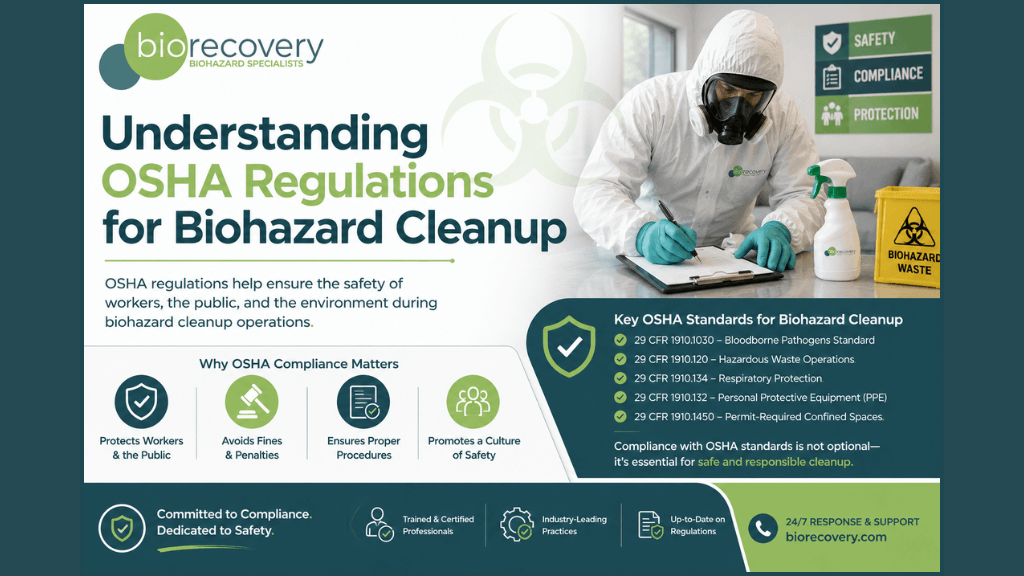
Biohazard cleanup involves far more than simply removing contaminated materials. Whether responding to a crime scene, unattended death, suicide, infectious disease exposure, blood spill, or hoarding environment, cleanup professionals must follow strict OSHA regulations designed to protect workers from exposure to bloodborne pathogens, infectious materials, hazardous substances, and other occupational hazards.
Understanding OSHA regulations for biohazard cleanup is essential for employers, property owners, facility managers, and remediation professionals. These regulations establish safety standards for training, personal protective equipment (PPE), exposure control, decontamination procedures, and waste handling to reduce the risk of injury, illness, and contamination.
What Are OSHA Regulations for Biohazard Cleanup?
The Occupational Safety and Health Administration (OSHA) establishes workplace safety standards that apply to biohazard remediation and trauma scene cleanup operations. These regulations help ensure that workers who may encounter blood, bodily fluids, infectious materials, or hazardous contaminants can perform their duties safely.
Several OSHA standards may apply during a biohazard cleanup project, including:
- Bloodborne Pathogens Standard (29 CFR 1910.1030)
- Personal Protective Equipment Standards
- Hazard Communication Standard
- Respiratory Protection Standard
- HAZWOPER (Hazardous Waste Operations and Emergency Response)
- Walking-Working Surfaces Standards
- Recordkeeping and Employee Training Requirements
The specific standards that apply depend on the nature of the contamination and the scope of the cleanup operation.
Why OSHA Biohazard Cleanup Regulations Matter
Biohazard scenes often contain invisible hazards that can pose serious health risks. Exposure to contaminated blood, bodily fluids, sharps, bacteria, viruses, mold, drug residue, or chemical contaminants can result in severe illness or injury.
OSHA regulations are designed to:
- Protect workers from exposure to infectious materials
- Reduce cross-contamination risks
- Establish safe cleanup procedures
- Require proper PPE and training
- Ensure contaminated materials are handled safely
- Promote effective decontamination practices
- Create documented safety protocols
Without proper controls, contamination can spread beyond the affected area and place workers, occupants, and the public at risk.
The OSHA Bloodborne Pathogens Standard
One of the most important OSHA regulations for biohazard cleanup is the Bloodborne Pathogens Standard (29 CFR 1910.1030).
This standard applies whenever employees may reasonably anticipate contact with:
- Human blood
- Blood-contaminated materials
- Certain bodily fluids
- Sharps
- Other potentially infectious materials (OPIM)
The regulation requires employers to develop procedures that minimize occupational exposure and protect employees performing cleanup activities.
Key Requirements Include:
- Written Exposure Control Plan
- Employee training
- Hepatitis B vaccination availability
- Appropriate PPE
- Engineering and work practice controls
- Proper labeling and containment
- Post-exposure evaluation procedures
- Medical record maintenance
These requirements are particularly relevant during crime scene cleanup, unattended death remediation, trauma cleanup, and infectious disease decontamination.
Exposure Control Plans
An Exposure Control Plan (ECP) serves as the foundation of OSHA compliance during biohazard cleanup operations.
The plan identifies:
- Potential exposure risks
- Employee responsibilities
- Required protective equipment
- Cleanup procedures
- Decontamination protocols
- Waste handling procedures
- Emergency response actions
OSHA requires these plans to be reviewed and updated regularly to reflect changes in workplace conditions and hazards.
Personal Protective Equipment (PPE) Requirements
Personal Protective Equipment is one of the most visible aspects of OSHA biohazard cleanup regulations.
Before entering a contaminated environment, workers must assess the hazards present and select appropriate protection.
Common PPE used during biohazard remediation includes:
- Disposable protective suits
- Nitrile gloves
- Cut-resistant gloves
- Face shields
- Safety goggles
- Respirators
- Protective footwear
- Head coverings
The level of protection required depends on the contamination, exposure risks, and environmental conditions.
OSHA PPE Assessment Requirements
Employers must:
- Conduct hazard assessments
- Provide appropriate PPE
- Train employees on proper use
- Ensure equipment is maintained
- Replace damaged PPE immediately
Failure to use adequate protective equipment can increase the risk of exposure to infectious agents and hazardous contaminants.
Respiratory Protection Requirements
Many biohazard cleanup environments present airborne hazards that cannot be controlled through ventilation alone.
Examples include:
- Decomposition odors
- Airborne pathogens
- Mold spores
- Drug residue particulates
- Chemical disinfectants
When respirators are required, OSHA's Respiratory Protection Standard mandates:
- Medical evaluations
- Respirator fit testing
- Employee training
- Written respiratory protection programs
- Equipment maintenance and inspection
Proper respiratory protection is critical for protecting workers from inhalation hazards during remediation activities.
OSHA Training Requirements for Biohazard Cleanup Workers
Training is a core component of OSHA compliance.
Employees involved in biohazard cleanup must understand:
- Hazard recognition
- Exposure risks
- PPE selection and use
- Decontamination procedures
- Emergency response protocols
- Waste handling requirements
- Bloodborne pathogen risks
Training must be conducted before exposure occurs and refreshed as required by applicable OSHA standards.
HAZWOPER and Biohazard Cleanup
Some biohazard cleanup situations may require compliance with OSHA's Hazardous Waste Operations and Emergency Response (HAZWOPER) standard.
HAZWOPER training may apply when workers encounter:
- Hazardous chemicals
- Drug lab contamination
- Chemical spills
- Large-scale environmental contamination
- Mixed hazardous and biological hazards
Depending on job duties, workers may require 24-hour or 40-hour HAZWOPER training along with annual refresher training.
Site Containment and Work Zones
OSHA regulations emphasize controlling contamination through effective site management.
Professional biohazard cleanup companies commonly establish:
Exclusion Zone
The contaminated area where cleanup activities occur.
Contamination Reduction Zone
The transition area used for personnel and equipment decontamination.
Support Zone
A clean area used for staging equipment, documentation, and operational support.
Proper work zone management helps prevent contaminants from spreading beyond the affected area.
Decontamination Procedures
Decontamination is a critical component of OSHA-compliant biohazard cleanup.
Workers must follow established procedures for:
- Cleaning tools and equipment
- Removing contaminated PPE
- Disinfecting work surfaces
- Preventing cross-contamination
- Handling reusable equipment
Improper decontamination can expose workers and building occupants to infectious materials long after cleanup appears complete.
Handling and Disposal of Biohazardous Materials
While OSHA primarily focuses on worker safety, biohazard cleanup operations must also comply with federal, state, and local requirements governing transportation and disposal.
Contaminated materials may include:
- Blood-soaked materials
- Sharps
- PPE
- Porous building materials
- Medical waste
- Contaminated furnishings
Materials must be properly packaged, labeled, transported, and disposed of according to applicable regulations.
Common Biohazard Cleanup Situations Covered by OSHA Standards
OSHA regulations may apply during:
- Crime scene cleanup
- Unattended death cleanup
- Suicide cleanup
- Trauma scene cleanup
- Infectious disease disinfection
- Hoarding cleanup
- Sewage contamination cleanup
- Drug contamination remediation
- Workplace blood spill cleanup
Each situation requires a site-specific hazard assessment to determine the appropriate safety measures.
Professional OSHA-Compliant Biohazard Cleanup
Biohazard remediation requires specialized training, safety protocols, and regulatory compliance. Professional cleanup companies follow OSHA regulations for biohazard cleanup to protect workers, occupants, and the public while restoring affected environments to a safe condition.
When dealing with blood contamination, unattended deaths, crime scenes, infectious disease exposure, or other biohazard incidents, working with trained professionals helps ensure the cleanup is conducted safely, thoroughly, and in compliance with applicable OSHA requirements.
Frequently Asked Questions About OSHA Regulations for Biohazard Cleanup
Does OSHA regulate crime scene cleanup?
Yes. OSHA regulations apply whenever employees may be exposed to bloodborne pathogens, infectious materials, hazardous substances, or other workplace hazards during crime scene cleanup operations.
What OSHA standard is most important for biohazard cleanup?
The Bloodborne Pathogens Standard (29 CFR 1910.1030) is generally considered the most significant OSHA regulation governing biohazard remediation activities involving blood or potentially infectious materials.
Is PPE required during biohazard cleanup?
Yes. OSHA requires employers to provide appropriate PPE whenever workers may be exposed to biological, chemical, or physical hazards during cleanup operations.
Do biohazard cleanup technicians need training?
Yes. OSHA requires training related to workplace hazards, bloodborne pathogens, PPE use, emergency procedures, and other applicable safety standards.
Can homeowners perform biohazard cleanup themselves?
While OSHA regulations generally apply to employers and workers, professional cleanup is strongly recommended due to the health risks, contamination concerns, and regulatory requirements associated with many biohazard situations.
Who We Are
Taking matters into your own hands is a huge health risk not only for you but the surrounding public. The good news is there is really no reason you have to. Bio Recovery is a fully OSHA compliant and certified professional biohazard company with over 20 years experience.
Bio Recovery crews complete the required 24 hour HAZMAT and HAZWOPER certification courses annually to stay up to date on the latest safe cleaning, restoration, removal, and transportation procedures. Furthermore, most situations are considered “no fault” and completely covered by insurance, so there is no cost to you.
Bio Recovery is a nationwide network of emergency HAZMAT and biohazard professionals.
Please do not hesitate to contact us at any time, 24/7, for immediate assistance.
Share this Post