



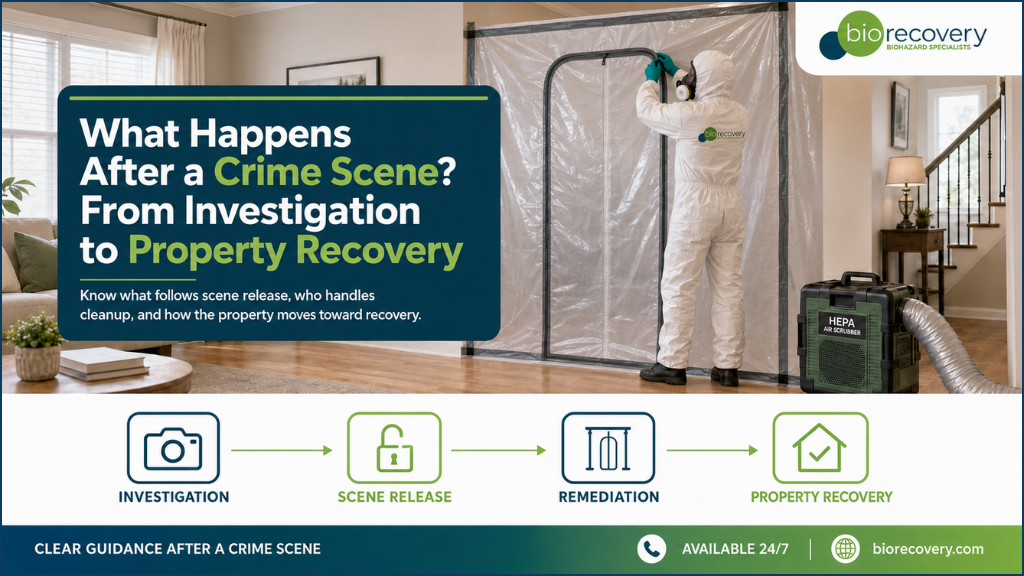
When law enforcement leaves a crime scene, the investigation may continue and the property may still be unsafe to use. Blood, bodily fluids, fingerprint powder, damaged materials, and hidden contamination can remain after investigators finish collecting evidence.
Understanding what happens after a crime scene helps you know when you can reenter, who becomes responsible for the property, and what must happen before repairs begin. Once authorities release the location, professional crime scene cleanup addresses biological hazards that law enforcement generally does not remove.
The process moves through distinct stages, from securing and documenting the scene to releasing, remediating, and repairing the property. Knowing where one stage ends and the next begins can help you protect the investigation without overlooking the conditions left behind.
What Happens After a Crime Scene Is Reported?
After someone reports a crime scene, first responders protect people from immediate danger and restrict access to the area. Investigators then document the scene, collect evidence, and determine when the property can be released.
The response depends on what occurred. A burglary may require photographs and fingerprint collection, while a violent death can also involve forensic specialists and a medical examiner or coroner.
How Investigators Process a Crime Scene
Crime scene processing preserves information that may explain what occurred. It does not restore the property or remove all materials connected to the incident.
According to the National Institute of Justice, investigators photograph and measure crime scenes, identify physical evidence, collect relevant items, and maintain a chain of custody.
Securing and Documenting the Area
Investigators restrict access to prevent evidence from being moved, damaged, or contaminated. Depending on the incident, the controlled area may include one room, an entire building, a vehicle, or an outdoor location.
The team records existing conditions before collecting anything. Investigators may take photographs, create diagrams, measure distances, and document everyone who enters the area.
Collecting and Preserving Evidence
The type of evidence collected depends on the suspected crime and the conditions inside the scene. Common examples include:
- Blood and other biological samples
- Fingerprints or palm prints
- Clothing and personal items
- Weapons or ammunition
- Fibers, glass, and other trace materials
- Digital devices
- Footwear impressions
- Surveillance recordings
Investigators package and label each item to protect its condition. The chain of custody records who collected, transferred, examined, and stored the evidence.
Continuing the Investigation Away From the Scene
The investigation often moves beyond the physical location after evidence collection ends. Detectives may interview witnesses, review video, obtain records, submit evidence for testing, and consult prosecutors.
The American Military University overview of the criminal investigation process explains how law enforcement coordinates with forensic specialists and legal authorities as a case progresses. This work can continue after you regain access to the property.
What Happens When Someone Dies at the Scene?
When a reportable death occurs, the medical examiner’s or coroner’s office conducts or directs the medicolegal death investigation. Depending on the jurisdiction and circumstances, this process can include confirming identity and determining the cause and manner of death.
Procedures vary by jurisdiction and circumstance. A suspected homicide or unexplained death receives different handling from an expected natural death.
Once the appropriate authority authorizes removal, the deceased is transported according to local procedures. Investigators may continue processing the surrounding area afterward.
Removing the deceased does not remove blood, tissue, decomposition fluids, or odors from the property. Those conditions require a separate remediation process after law enforcement releases the scene.
When Does Law Enforcement Release a Crime Scene?
Law enforcement releases a crime scene when the agency in control determines that it no longer needs exclusive access for on-site evidence work. Release returns control to an authorized person, but it does not mean the criminal case has ended.
No universal crime scene timeline applies to every incident. The time required can depend on:
- The type of crime
- The size of the location
- The amount and condition of the evidence
- The need for forensic specialists
- Search warrant requirements
- Weather at an outdoor scene
Do not cross police tape, move belongings, or start cleaning until the investigating agency gives permission. If you aren’t sure whether the property has been released, contact the investigating officer or department.
Can the Investigation Continue After Release?
Yes. Detectives can continue interviewing people, reviewing records, testing evidence, or preparing a case after releasing the property.
Investigators may also request follow-up access if new information creates a need to examine the location again. Ask whether any rooms or belongings remain restricted before arranging cleanup.
What Can Investigators Leave Behind?
A released crime scene can still contain biological hazards, investigative residue, and physical damage. Law enforcement collects evidence but generally does not perform property remediation.
Conditions left behind may include:
- Blood on floors, walls, or furniture
- Bodily fluids beneath carpet or flooring
- Tissue or other biological material
- Fingerprint powder
- Sharps or broken glass
- Damaged doors and windows
- Tear gas residue
- Biological odors
Not every hazard remains visible. Fluids can reach carpet padding, subflooring, wall cavities, unfinished wood, and upholstered furniture.
The same problem can occur after an accident or medical emergency that does not become a police-controlled crime scene. Trauma cleaning after injuries and emergencies addresses biological material that remains after first responders finish providing care.
Who Cleans a Crime Scene After Police Leave?
The person or organization responsible for the property usually arranges cleanup once law enforcement releases it. The responsible party depends primarily on who owns, manages, or controls the location.
| Location | Who commonly arranges cleanup | What to confirm |
|---|---|---|
| Private home | Homeowner or authorized family member | Release status and insurance terms |
| Rental property | Owner, landlord, or property manager | Lease and local requirements |
| Business | Owner or property management | Access and insurance procedures |
| Public property | Managing government agency | Agency procedures |
Arranging the work does not always mean paying the entire cost personally. Property insurance or a state crime victim compensation program may provide assistance based on the incident and applicable eligibility rules.
The handoff from police to the property’s responsible party is a commonly misunderstood part of who is responsible for cleaning a crime scene. That responsibility may shift between an owner, landlord, employer, or public agency based on where the incident occurred.
What Happens After a Crime Scene Is Released?
After release, the property moves from evidence processing to contamination assessment. Bio Recovery determines which areas and materials require remediation before repair work or normal use can begin.
Our technicians do not decide whether an object is evidence. Any questions about restricted rooms or belongings must be resolved with the investigating agency before cleanup starts.
1. Assessing the Affected Area
Our technicians identify visible contamination and determine whether it may have traveled beneath the surface. For example, blood visible on carpet may extend through the padding and into the subfloor.
The assessment also considers the affected materials. Sealed metal and glass respond differently to decontamination than carpet, mattresses, unfinished wood, or upholstery.
2. Controlling the Work Area
We restrict access to reduce the chance of contamination moving into unaffected spaces. Technicians select protective equipment and containment measures based on the conditions found during the assessment.
The OSHA Bloodborne Pathogens Standard requires covered employers to protect workers with occupational exposure to blood or other potentially infectious materials. It also requires contaminated work surfaces to be cleaned and decontaminated with an appropriate disinfectant.
3. Treating or Removing Contaminated Materials
Restorable surfaces are cleaned and disinfected using methods appropriate for the material. Items that absorbed biological material beyond the reach of effective treatment may require removal.
The CDC’s guidance for healthcare environments separates cleaning from disinfection and calls for appropriate protective equipment when addressing blood or body-fluid spills. These principles also show why applying disinfectant over visible biological material does not complete the cleaning process.
Our detailed explanation of how professionals clean up crime scenes covers the complete remediation process, including containment, removal, decontamination, odor treatment, and final verification.
4. Preparing the Property for Repairs
After remediation, we review the defined work area and document what was treated or removed. Damaged finishes and structural materials can then be repaired or replaced.
Remediation must come before reconstruction when contamination extends into building materials. Installing new flooring over an affected subfloor would conceal the problem rather than resolve it.
How Investigation, Cleanup, and Repair Differ
These stages serve separate purposes. The table shows who handles each stage and what must be completed before the property can move forward.
| Stage | Primary purpose | Typical work |
|---|---|---|
| Investigation | Preserve evidence | Photography, collection, documentation |
| Biohazard cleanup | Address contamination | Assessment, removal, decontamination |
| Property repair | Restore damaged areas | Flooring, drywall, reconstruction |
A released property may still need remediation. A remediated property may still need repairs before it looks finished or returns to normal use.
What Should You Do After the Property Is Released?
Once you receive confirmation of release, focus on controlling access and documenting the property without disturbing contaminated materials. Follow these steps:
- Ask whether any rooms or belongings remain restricted.
- Keep children, visitors, and animals away from the affected area.
- Avoid touching blood, bodily fluids, sharps, or investigative residue.
- Contact your insurer and ask what documentation is required.
- Take photographs from a safe location if requested.
- Arrange an assessment of the affected area.
- Save invoices, photographs, and related correspondence.
Do not remove carpet or wash affected surfaces before the scope is understood. Handling contaminated materials without proper controls can move biological material into areas that were not previously affected.
How Long Does Crime Scene Cleanup Take?
Crime scene cleanup may take part of a day or several days. The affected area, type of material, and depth of contamination determine the timeline.
A contained incident on a nonporous surface usually requires less work than contamination beneath flooring or inside walls. Decomposition and incidents involving several rooms can also extend the process.
The cleanup timeline begins after law enforcement releases the property. It is separate from the length of the criminal investigation or court case.
Frequently Asked Questions
What happens after a crime scene investigation is complete?
Law enforcement releases the property to an authorized person after completing its on-site evidence work. The responsible party can then arrange contamination assessment, cleanup, and necessary repairs.
Do police clean up crime scenes?
No. Police document the scene and collect evidence, but they generally do not remove biological contamination or restore the property.
Can you enter after the police leave?
You can enter after the agency in control confirms the release and explains any remaining restrictions. The absence of officers does not automatically mean you have permission to enter.
Is a released crime scene safe?
Not necessarily. Release means investigators no longer require exclusive control of the property, not that biological hazards or investigative residue have been removed.
Can cleanup begin while the criminal case remains open?
Yes. Cleanup can usually begin after law enforcement releases the property, even if evidence testing, interviews, or legal proceedings continue.
What happens to contaminated furniture and belongings?
Each item is evaluated based on its material and level of contamination. Some belongings can be decontaminated, while deeply affected porous items may require disposal.
Does insurance cover crime scene cleanup?
Some homeowners, renters, and commercial property policies provide coverage. The policy language and circumstances of the incident determine what expenses qualify.
What Happens After a Crime Scene: Key Takeaways
What happens after a crime scene extends beyond evidence collection. Law enforcement controls and processes the location first, then an authorized property owner or responsible party coordinates cleanup and any necessary repairs after release.
What to Remember:
- Do not enter or move belongings until the investigating agency confirms the scene has been released.
- Scene release does not mean the criminal investigation or legal case has ended.
- Law enforcement generally collects evidence but does not remediate the affected property.
- Blood, bodily fluids, and other contamination can remain beneath visible surfaces.
- Cleanup responsibility depends on who owns, manages, or controls the location.
- Biohazard remediation should address affected materials before reconstruction conceals them.
- Insurance or crime victim compensation may help with eligible costs, depending on the situation.
You don’t need to assess the property or determine the next step on your own. Contact Bio Recovery for clear guidance and a professional assessment after law enforcement releases the scene.