



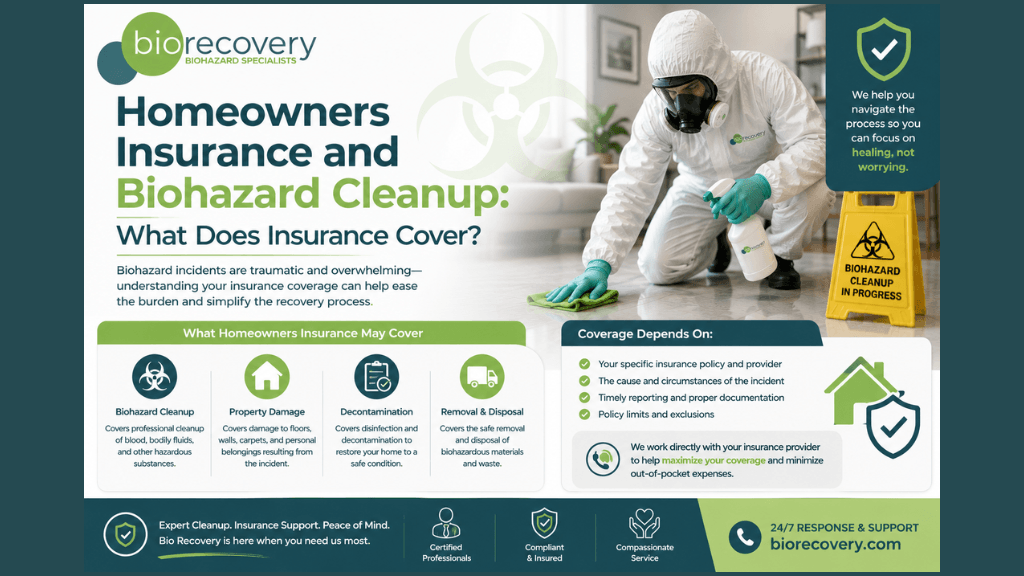
Does Homeowners Insurance Cover Biohazard Cleanup?
In many situations, homeowners insurance may cover biohazard cleanup when the contamination results from a covered event, such as an unattended death, traumatic incident, accidental injury, or other sudden loss. Coverage often extends to professional remediation, disposal of contaminated materials, and restoration of affected areas.
However, coverage varies by policy, insurance carrier, cause of loss, and specific exclusions. Homeowners should review their policy and speak directly with their insurance provider to determine eligibility.
What Is Biohazard Cleanup?
Biohazard cleanup involves the safe removal, cleaning, disinfecting, and disposal of hazardous biological materials that may pose health risks.
Examples include:
- Blood and bodily fluids
- Trauma scene contamination
- Unattended death cleanup
- Suicide cleanup
- Decomposition remediation
- Infectious disease contamination
- Sewage-related biohazards
Professional biohazard remediation companies use specialized equipment, personal protective equipment (PPE), and regulated disposal procedures to restore safe conditions.
When Does Homeowners Insurance Cover Biohazard Cleanup?
Many homeowners insurance policies may provide coverage when the contamination results from a sudden and accidental event.
Commonly Covered Situations
Unattended Death Cleanup
If a homeowner or occupant passes away and is not discovered immediately, the resulting contamination and remediation costs may be covered under certain homeowners policies.
Potentially covered expenses include:
- Biohazard remediation
- Decontamination
- Odor removal
- Flooring removal
- Restoration work
Trauma and Accident Cleanup
Coverage may apply when blood or bodily fluid contamination results from:
- Household accidents
- Falls
- Serious injuries
- Other unexpected incidents
Crime Scene Cleanup
When contamination results from criminal activity occurring on the property, some policies may provide coverage for remediation and restoration. In addition many states have Crime Victims Compensation Programs.
Property Restoration
Coverage may extend beyond cleanup itself and include:
- Carpet replacement
- Drywall removal
- Subfloor replacement
- Painting and repairs
Coverage limits vary by policy.
Situations That May Not Be Covered
Not every biohazard event qualifies for insurance coverage.
Potential exclusions may include:
Long-Term Neglect
Damage resulting from ongoing neglect or failure to maintain the property may not be covered.
Intentional Damage
Insurance policies generally exclude intentionally caused damage.
Certain Environmental Hazards
Coverage for mold, contamination, or environmental conditions may be subject to separate policy limitations or exclusions.
Vacant Property Restrictions
Some policies have different rules for vacant or unoccupied homes.
What Biohazard Cleanup Costs May Be Covered?
Depending on the policy, insurance may cover the following Biohazard Cleanup Costs:
| Expense Type | Potential Coverage |
| Biohazard remediation | Often covered |
| Labor costs | Often covered |
| Disinfecting and decontamination | Often covered |
| Regulated waste disposal | Often covered |
| Odor remediation | Often covered |
| Structural demolition | May be covered |
| Restoration and repairs | May be covered |
| Temporary relocation expenses | May be covered in some cases |
Every claim is evaluated individually.
Real-World Insurance Claim Scenarios
The examples below will help you understand who pays for biohazard cleanup.
Scenario 1: Unattended Death in a Residence
A homeowner passes away and is discovered several days later.
Potential Costs
- Biohazard remediation
- Decomposition cleanup
- Odor treatment
- Flooring replacement
Insurance Outcome
Many homeowners policies may cover all or part of the remediation and restoration expenses, subject to deductibles and policy limits.
Scenario 2: Serious Injury Accident
A family member suffers a traumatic injury resulting in significant blood contamination.
Potential Costs
- Blood cleanup
- Disinfection
- Disposal of contaminated materials
Insurance Outcome
Coverage may apply if the incident qualifies as a covered accidental loss.
Scenario 3: Crime Scene Contamination
A criminal incident results in contamination within the home.
Potential Costs
- Trauma cleanup
- Structural restoration
- Decontamination
Insurance Outcome
Coverage depends on policy language and claim circumstances.
How the Insurance Claims Process Works
Step 1: Contact Bio Recovery First
Before contacting your insurance carrier, call Bio Recovery. Our team can review the situation, help determine whether your policy may provide coverage, and guide you through the claims process from the very beginning.
To help us assist you, have a copy of your homeowners, renters, commercial property, or auto insurance policy available. We will review the available information and work directly with your insurance company whenever possible, reducing the burden on you during a difficult time.
Step 2: Document the Incident
If it is safe to do so, take photographs of the affected area and preserve any documentation related to the incident. Depending on the circumstances, this may include police reports, incident reports, or other supporting records.
Step 3: Bio Recovery Coordinates with Your Insurance Carrier
Our team can communicate directly with your insurance company, adjuster, or claims representative to provide the information they need. This often includes:
- Detailed scope of work
- Biohazard remediation estimates
- Photographic documentation
- Regulatory compliance documentation
- Supporting reports required for claim review
By working directly with the insurance carrier, we help streamline the process and minimize the amount of paperwork and follow-up required from you.
Step 4: Insurance Claim Review
The insurance company will evaluate the claim based on several factors, including:
- Cause of loss
- Policy terms and coverage limits
- Extent of contamination or damage
- Remediation and restoration costs
Bio Recovery remains available throughout the review process to answer questions and provide additional documentation if requested by the carrier.
Step 5: Cleanup, Remediation, and Restoration
Once authorization is received, Bio Recovery can begin the cleanup process. Our certified technicians safely remove biohazardous materials, disinfect affected areas, eliminate odors, and return the property to a safe condition. We continue coordinating with the insurance company throughout the project to help ensure a smooth claims experience from start to finish.
Questions to Ask Your Insurance Provider
Before proceeding, homeowners should ask:
- Does my policy cover biohazard cleanup?
- Is unattended death remediation covered?
- Are crime scene cleanup services covered?
- What is my deductible?
- Are odor remediation costs covered?
- Is structural restoration included?
- Do you have preferred remediation vendors?
Getting answers early can help avoid surprises during the claims process.
Why Professional Documentation Matters
Insurance companies often require detailed documentation of:
- Contamination extent
- Remediation procedures
- Disposal records
- Restoration needs
Professional remediation companies typically provide reports that help support claims processing.
Frequently Asked Questions
Does homeowners insurance cover biohazard cleanup?
In many cases, yes. Coverage often depends on the cause of loss, policy terms, deductibles, and exclusions.
Is unattended death cleanup covered by insurance?
Many homeowners insurance policies may cover unattended death cleanup, including remediation and restoration costs, subject to policy terms.
Does insurance pay for odor removal?
In some situations, odor remediation may be included when it is part of a covered loss.
What if contaminated flooring needs to be removed?
Structural repairs and material replacement may be covered depending on the policy and claim circumstances.
Will insurance cover crime scene cleanup?
Some homeowners policies provide coverage for crime scene cleanup and associated restoration costs.
Should I hire a remediation company before contacting insurance?
Homeowners should notify their insurer promptly. Emergency mitigation work may be necessary, but insurance carriers can often provide guidance regarding the claims process.
Key Takeaways
- Homeowners insurance may cover biohazard cleanup when contamination results from a covered event.
- Commonly covered situations may include unattended deaths, trauma incidents, and certain crime scenes.
- Coverage often extends to remediation, decontamination, disposal, and restoration work.
- Every claim is unique and subject to policy language, exclusions, deductibles, and coverage limits.
- Professional remediation documentation can help support insurance claims and streamline the process.