



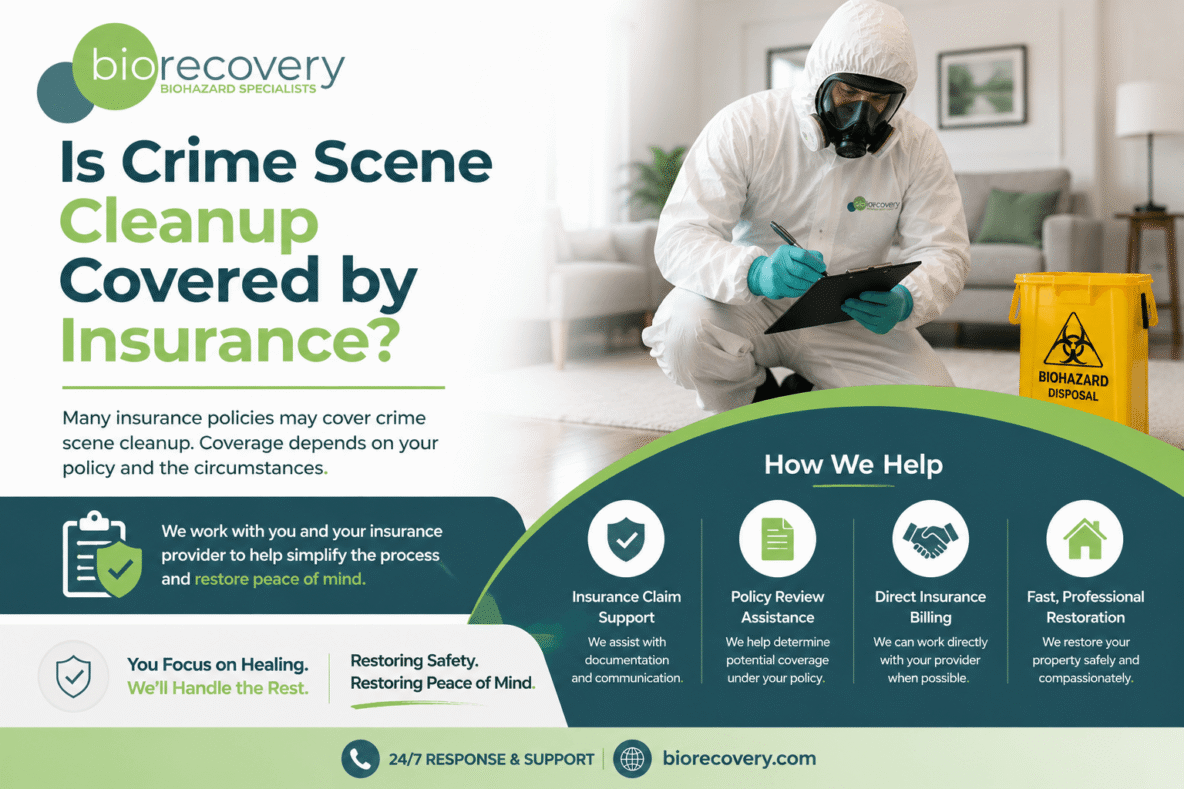
Yes, crime scene cleanup is often covered by homeowners, renters, commercial property, or property management insurance policies when the cleanup is necessary due to a covered event. Coverage typically includes biohazard remediation, decontamination, odor removal, disposal of hazardous materials, and restoration of affected areas, although policy terms and exclusions vary.
The fastest way to determine coverage is to contact your insurance carrier and speak with a claims representative. At Bio Recovery we help document losses and work directly with insurers during the claims process so you don’t have to.
Understanding Insurance Coverage for Crime Scene Cleanup
When a traumatic event occurs, many people assume they are responsible for paying the full cleanup cost out of pocket. In reality, insurance frequently covers a significant portion—or even all—of the remediation expenses.
Coverage generally depends on:
- The type of insurance policy
- The cause of the incident
- Whether the event is considered a covered loss
- Policy limits and exclusions
- State regulations and victim assistance programs
What Crime Scene Cleanup Services Are Typically Covered?
Many policies cover the professional remediation services required to safely restore a property.
Commonly Covered Services
|
Service |
Often Covered by Insurance |
|
Blood cleanup |
Yes, in many cases |
|
Biohazard remediation |
Yes |
|
Decontamination and disinfection |
Yes |
|
Odor removal |
Yes |
|
Removal of contaminated materials |
Yes |
|
Drywall and flooring removal |
Often |
|
Restoration and reconstruction |
Sometimes, depending on policy |
|
Emergency response services |
Often |
Coverage varies by insurer and policy language.
Insurance Coverage by Situation
Unattended Death
Many homeowners insurance policies cover cleanup associated with an unattended death when biohazard remediation is required.
Coverage often includes:
- Biohazard cleanup
- Odor remediation
- Removal of contaminated materials
- Restoration of affected areas
Suicide Cleanup
Suicide cleanup is commonly covered under homeowners or renters insurance policies.
Coverage may include:
- Professional cleanup
- Biohazard removal
- Structural remediation
- Odor treatment
Policy terms differ by carrier, so verification is important.
Homicide or Violent Crime Cleanup
Coverage is frequently available when a crime scene creates contamination that renders the property unsafe.
Insurance may pay for:
- Trauma scene remediation
- Blood cleanup
- Decontamination
- Repairs to affected areas
Accidental Death Cleanup
Accidental deaths that result in biohazard contamination are often covered under standard property insurance policies.
What Insurance Usually Does Not Cover
While many cleanup costs are covered, certain expenses may not be.
Potential exclusions include:
- Pre-existing contamination
- Unrelated property upgrades
- Unapproved contractors
- Costs exceeding policy limits
- Events specifically excluded by the policy
Review your policy and claims documentation carefully.
How the Claims Process Typically Works
Step 1: Contact Emergency Services (If Necessary)
Ensure the scene has been released by law enforcement or relevant authorities before cleanup begins.
Step 2: Notify Your Insurance Carrier
Contact your insurer as soon as possible and report the incident.
Be prepared to provide:
- Policy information
- Incident details
- Property address
- Contact information
Step 3: Schedule Professional Cleanup
A certified biohazard remediation company can:
- Assess contamination
- Document damage
- Create estimates
- Provide remediation reports
Step 4: Submit Documentation
Insurers commonly request:
- Photos
- Damage reports
- Cleanup estimates
- Invoices
- Remediation records
Step 5: Claim Review and Payment
The insurer evaluates the claim and determines eligible reimbursement based on policy terms.
Who Pays if Insurance Does Not Cover the Cleanup?
If insurance coverage is unavailable or limited, potential sources of assistance may include:
- State victim compensation programs
- Crime victim assistance funds
- Property owners
- Estate resources
- Government assistance programs (where applicable)
Eligibility varies by jurisdiction.
Real-World Examples
Scenario 1: Unattended Death in a Home
A homeowner discovers a relative several days after passing.
Cleanup Required
- Biohazard remediation
- Odor removal
- Flooring replacement
Insurance Outcome
Often covered under homeowners insurance, subject to deductible and policy terms.
Scenario 2: Suicide Cleanup
A family needs professional remediation following a traumatic event.
Cleanup Required
- Blood cleanup
- Decontamination
- Odor treatment
Insurance Outcome
Frequently covered under homeowners insurance.
Scenario 3: Commercial Property Incident
A business experiences a traumatic event requiring professional remediation.
Cleanup Required
- Biohazard cleanup
- Decontamination
- Restoration
Insurance Outcome
May be covered under commercial property insurance.
Why Professional Documentation Matters
Insurance companies typically require evidence that cleanup was performed properly and safely.
Professional remediation companies can provide:
- Detailed estimates
- Scope of work reports
- Before-and-after documentation
- Disposal records
- Completion reports
This documentation often helps support a smoother claims process.
At Bio Recovery We Deal With Your Insurance Company Directly
Crime scene cleanup is often covered by homeowners, renters, and commercial property insurance policies when remediation is required following a covered event. Because every policy is different, the most important step is reporting the incident promptly, documenting damages thoroughly, and working with experienced biohazard remediation professionals who understand the insurance claims process.
When handled correctly, insurance can significantly reduce or eliminate out-of-pocket costs for families and property owners facing an already difficult situation. Contact Bio Recovery today.
Frequently Asked Questions
Is crime scene cleanup covered by homeowners insurance?
In many cases, yes. Homeowners insurance often covers biohazard remediation resulting from a covered event, subject to policy limits and exclusions.
Does renters insurance cover crime scene cleanup?
Renters insurance may provide coverage depending on the policy and circumstances surrounding the incident.
Does insurance cover unattended death cleanup?
Many homeowners policies cover unattended death cleanup, including biohazard remediation and restoration expenses.
Does insurance cover suicide cleanup?
Suicide cleanup is frequently covered by homeowners insurance, although coverage should always be verified with the carrier.
Who pays for crime scene cleanup if insurance denies the claim?
Payment may come from the property owner, estate resources, victim compensation programs, or other available assistance programs.
Will insurance pay for odor removal?
Odor remediation is often covered when it is directly related to a covered biohazard loss.
How do I know if my policy covers cleanup?
Contact your insurance carrier and review your policy language. A qualified remediation company may also help identify potential coverage options.