


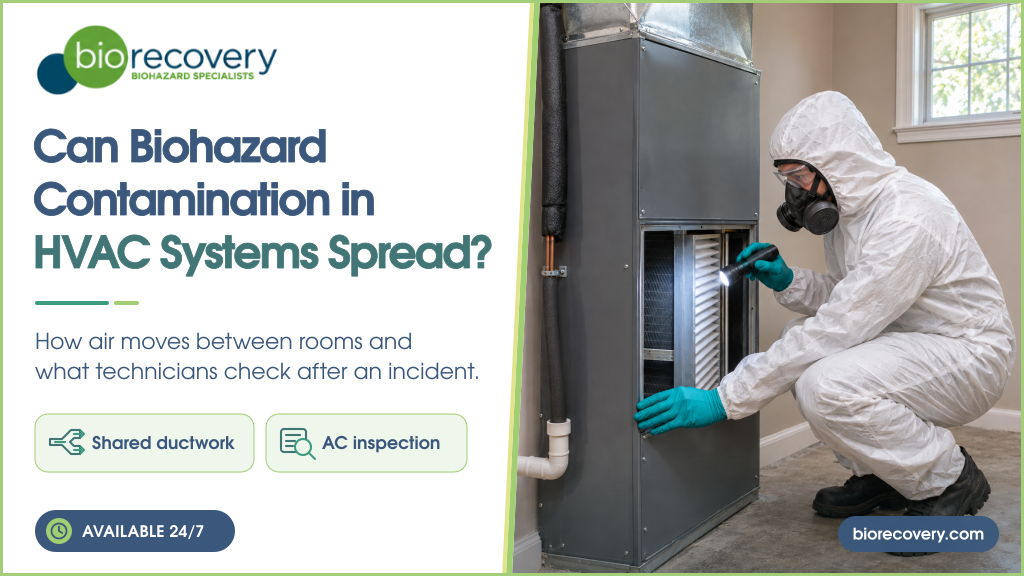
Yes, biohazard contamination in HVAC systems can spread to other rooms when contaminated particles enter a system that recirculates air. The potential reach depends on which rooms the equipment serves. Liquid can also enter a vent or reach the equipment directly, even when the system is off.
If an incident happened in one room and you notice an odor elsewhere, the first question is what actually traveled. Odor can follow moving air, while residue along the path of a spill can point to direct contact with the system. When you contact us for biohazard cleanup services, we use the building layout and the details of the incident to narrow down where to look.
How can HVAC systems spread biohazard contamination between rooms?
A central system can carry airborne particles from the incident area into other spaces it serves. Its return and supply ducts connect the equipment to those rooms. Return vents draw room air back to the equipment, while supply vents deliver heated or cooled air.
A return near the source gives airborne particles a route into the system while the blower runs. Some particles can settle on surfaces inside the equipment. Particles that stay in the moving air can continue toward the supply vents.
A room can share a return located in the hallway. In that layout, air can move out through the doorway before it reaches the return, which makes the layout around the incident relevant as well as the vents inside the room.
The blower can run between heating or cooling cycles when the thermostat fan is set to run continuously. If you know how the fan was set, that detail can help us work out whether air was moving before anyone discovered the incident.
How far can contamination spread through shared ductwork?
The equipment’s service area matters more than how close two rooms are. Rooms on different floors can share an air handler, while two rooms across a hall can use separate equipment. For a larger property, we start with the rooms that share air through the affected system.
A floor plan or equipment schedule can help building staff identify which ducts and rooms actually connect to the affected equipment. In a commercial building, the fan schedule can help narrow down which parts of the building had air moving during the incident.
Air can also move biohazard contamination through doorways or other openings in the building. If a concern shows up in a room outside the system’s service area, we consider how air moved between the rooms as well as what people or equipment may have carried across.
Can contamination reach HVAC equipment when the system is off?
Yes. Liquid can flow into an opening or come into contact with equipment without any help from the blower. In that situation, the height of the water or the direction of the spill helps us work out which surfaces it could have reached.
Water can also create a separate problem inside the system. When a drain fails to carry condensation away from a cooling coil, moisture can linger around the equipment and support mold growth. Finding the source of that moisture helps determine whether the work also needs to address a drainage problem.
What are the signs of biohazard contamination in HVAC systems?
The most useful clues tie an observation to a known incident. What you noticed before anyone changed the thermostat or moved belongings can help us decide where to start.
- A vent or nearby equipment lies in the path a spill or floodwater took.
- An odor starts in a different room when the blower comes on or changes as the fan cycles.
- New staining appears on a grille near the incident. Tell us if you know the stain was already there.
- Water collects around the equipment after a known leak or drainage failure.
Odor can linger in affected flooring or furnishings after the original source is removed. When a smell seems strongest near a vent, we check the surrounding materials as part of locating the source. That can help determine whether the room needs further odor remediation.
Which incidents can put HVAC inspection in the cleanup scope?
We consider HVAC inspection when the incident creates a credible route into the system. The same type of incident can call for different work depending on its location.
| Incident | What changes the assessment | Where we start |
|---|---|---|
| A contained blood spill | The spill stayed on a hard surface away from ventilation openings. | Assess the spill area and any surfaces affected by contact afterward. |
| A sewage backup | Liquid reached a floor register, giving it a direct path below the grille. | Check the opening and accessible duct below it to determine how far the liquid went. |
| An unattended death | An odor appeared outside the source room, or fluids reached an opening. | Trace the odor back to its source and assess any openings along the path of the fluids. |
| A leak above ductwork | Water reached the outside of a duct or wetted its insulation. | Determine which sections got wet and whether water reached the inside. |
Can a contaminated AC system make you sick?
Some biological contaminants in indoor air can affect your health. Exposure to mold can trigger allergic reactions or asthma symptoms, and the effects vary with the type and level of exposure.
If you notice coughing or irritation at certain times in a building, tell a healthcare professional when the symptoms started and whether they change when you leave. That pattern is useful medical context. We assess the property to identify possible sources and routes of exposure.
Direct contact with blood raises a separate concern. At work, a blood splash to the eyes or onto broken skin can qualify as an exposure incident. Seek medical care promptly after that kind of contact with potentially infectious material.
What should you do if you suspect biohazard contamination in your HVAC system?
Make your first decisions from outside the affected area. We can help you work out what to do about the system while we arrange an assessment.
- Keep the area undisturbed. Limit access and leave affected items in place so people and belongings stay clear of the route where material could transfer.
- Keep an affected system off if it’s already off. If it’s running, call us for guidance and notify the person who controls it in a shared building. If floodwater reached the equipment, keep it off and arrange for a professional evaluation as part of flood cleanup.
- Share the timeline you already have. Tell us when you first noticed the incident and whether anyone ran portable fans or moved items afterward. Give the approximate times if you know them.
- Arrange access from a safe location. If the area is under investigation, confirm its release status and identify who can authorize the work before biohazard cleanup.
How do we assess and address HVAC contamination?
We use the inspection to decide whether the work stays in the incident area or extends to part of the HVAC system. That decision gives you a clearer scope for both the cleanup and any equipment work.
How do we confirm whether contamination reached the ductwork?
We look for physical evidence along the suspected route into the system. Ordinary dust can collect in ducts over time, so we compare what we see with the path of the incident. A distinct streak that continues from the floor into the opening gives us a specific area to inspect.
Access matters when the route passes through a wall or ceiling. If we can see the first section but the next section runs behind a finished surface, we identify what remains unexamined and whether the findings justify additional access. A finding in one section describes that section, so we track where the inspection began and ended.
That distinction belongs in the scope of work. When you’re choosing a biohazard cleanup company, ask how the written scope separates confirmed findings from areas that need further inspection. If the property manager controls access to the equipment, clarify who needs to authorize that part of the assessment.
When do HVAC components need cleaning or replacement?
The decision depends on whether we can reach and treat the affected material. During biohazard decontamination, we account for how deeply material has absorbed the contamination as well as what we can see on the surface.
| Inspection finding | What can happen next |
|---|---|
| Residue on accessible, intact metal | Clean the affected surface and evaluate whether the material and conditions allow for disinfection. |
| Contaminated liquid absorbed into duct lining | Determine the extent of the affected lining and whether that section needs removal or replacement. |
| Water inside the air handler cabinet | Identify the components the water reached and include any required equipment evaluation in the scope. |
| Findings indicate the material stayed outside the ventilation system | Keep the cleanup focused on the affected room and materials. |
How do we limit spread during cleanup?
We set up containment around the affected work area and control how people and materials move through it. If an HVAC opening falls inside that area, we account for it in the containment plan. The way we manage an opening depends on the equipment and whether it also serves spaces that remain in use.
We also plan how to move affected materials out of the work area. In a building with shared hallways, we identify the route in advance and coordinate access with building staff. This matters because removing contaminated material creates a separate opportunity for transfer along that route.
If building staff are managing the equipment while cleanup is underway, we clarify which unit or zone needs to stay out of service. A clear handoff helps prevent someone from restarting the affected system during work because a neighboring area still has normal service.
When can you turn the HVAC system back on?
Wait for confirmation that the work needed on the affected system is complete before restarting it. If the incident involved water, the review also needs to account for any unresolved moisture or drainage issue that could affect the equipment again. For a cooling unit with an overflow, that may include checking that the drain pan empties as intended.
Professional biohazard cleanup includes a final review against the agreed scope. For a job involving ventilation, ask which equipment that review covers and who will confirm that it can return to service. If any part of the equipment still needs evaluation, ask for that item in the handoff so the person responsible for the system knows it remains open.
What affects the cost of biohazard cleanup involving HVAC?
HVAC work can increase the cost of biohazard cleanup when it expands the affected area or adds material removal. Access also matters. Inspecting an exposed duct and reaching one above a finished ceiling involve different amounts of work.
When you review the estimate, look at which tasks it covers. If a section of duct lining needs replacement, for example, clarify whether the estimate includes removal, replacement, or both. That gives you a clearer picture of what the project will cost and which work still needs pricing.
Some costs become clear only after we can inspect the affected area. If a second duct branch connects to the affected run, we may need to inspect that branch before we can price any work on it. Ask what findings could lead to an updated estimate and how we’ll document the change.
Key takeaways
If you’re reporting possible biohazard contamination in HVAC systems, start with what happened and when you noticed it.
- Use the system’s service area to identify which rooms may share an air path.
- Report odors or marks as observations. Inspection findings help define the cleanup scope.
- If material reached the system, the affected component and how deeply contamination penetrated guide treatment.
- Confirm who controls the affected system during cleanup and who will clear it for use afterward.
If you’re unsure whether an incident reached a vent or equipment, contact Bio Recovery Biohazard Specialists. We’re available 24/7 to discuss what happened and help you determine where the assessment should start.
Frequently asked questions
Can a window AC unit spread contamination through central ducts?
A window AC unit normally circulates room air through its own equipment. If the room also has a central return, we assess that return separately because it connects to a different system.
Can a new HVAC filter remove biohazard contamination?
A filter can capture some particles from air that passes through it. Residue already on a grille, inside a duct, or in the equipment requires assessment at that location.
Can you tell what bacteria are growing in an AC unit by smell?
An odor can help locate damp material or standing water. Identifying a particular bacterium requires appropriate sampling and analysis when that information would affect the response.
Can you test HVAC ductwork for contamination?
Targeted testing can help answer a specific question about material from a particular location. Results apply to the sample collected, so we consider them alongside the inspection findings and what the system serves.