



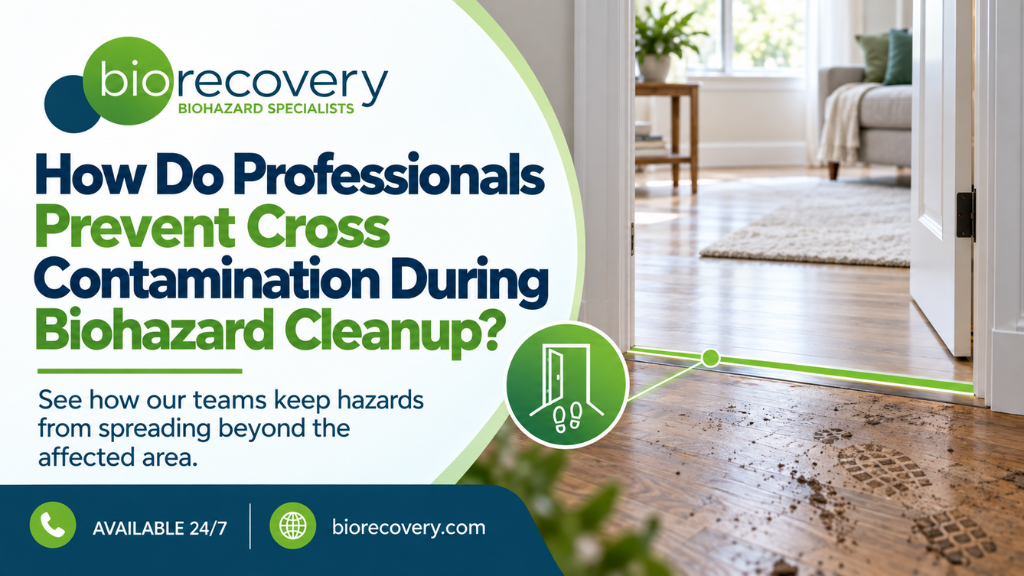
A blood spill can begin in one room and reach another on a shoe. A contaminated glove can touch a door handle, and a used cloth can carry material to the next surface it wipes. Biohazard cross contamination happens when biological material moves from an affected place to one that was previously unaffected.
Preventing that spread means controlling what people touch and where affected items go. Our professional biohazard cleanup teams assess the likely path of contamination, set work boundaries, and manage materials throughout the job.
What Is Biohazard Cross Contamination?
Biohazard cross contamination is the transfer of potentially harmful biological material between people, objects, surfaces, or areas. Blood or another bodily fluid may be visible where an incident occurred, while material carried away from that spot is harder to recognize.
A possible transfer does not mean someone has become ill. It means we need to consider that location during our assessment. We look at what happened after the incident rather than treating the edge of a visible stain as the edge of the affected area.
How Can Contamination Spread Through a Property?
Contamination can spread when people walk through an affected area, touch soiled items, or move materials before cleanup begins. The same thing can happen during cleanup if workers reuse a soiled tool or move waste without containing it.
These examples show where a small incident can create another area to assess:
| Original source | Possible transfer | Next area to assess |
|---|---|---|
| Blood on a floor | Someone walks through it | Footwear and the route taken |
| A soiled glove | Someone opens a door | The handle and later touch points |
| A used cleaning cloth | Someone wipes another surface | The second surface |
| An affected belonging | Someone carries it out | Hands and the route through the property |
| A leaking waste container | Fluid escapes during removal | Surfaces along the removal route |
The table identifies possible routes, not proof that every surface listed is contaminated. During an assessment, we narrow the scope by asking who entered, what they touched, and whether anything was moved.
How Do Professionals Prevent Biohazard Cross Contamination?
We control contamination at each point where it could leave the affected area. The exact work plan depends on the incident, but it follows a clear sequence.
1. We Identify the Source and Trace Movement
We start where the incident occurred, then follow what happened next. We ask which doors people used, whether anyone crossed the affected floor, and whether clothing or belongings left the room.
This changes where we inspect. If someone carried a soiled rug down a hallway, the hallway becomes part of the assessment. If no one entered a closed room after the incident, the likely transfer routes may be fewer.
2. We Set Boundaries Around the Work
We restrict access so other people do not unknowingly enter the affected area. We also plan where supplies will come in and how technicians and materials will leave.
A boundary only works when we pay attention to its exit. Before moving out of the work area, we check anything that could carry material across it, including footwear and equipment. The University of Washington’s 2025 biohazardous spill procedures likewise call for restricted access to spills in public spaces and careful removal of contaminated protective gear.
3. We Manage Gloves and Other Protective Gear
Protective gear can become contaminated while we work. A glove that touched biological material should not then touch a clean phone, supply container, or door handle.
We change gear as tasks require and remove it carefully at the work boundary. We clean our hands after removing gloves because the removal itself can contaminate them. The CDC’s hand hygiene guidance makes both points clear: gloves do not replace hand hygiene, and dirty gloves can soil hands as they come off.
4. We Keep Used Tools Out of Clean Areas
A tool carries a transfer risk after it touches affected material. We keep used cloths and equipment separate from clean supplies, then clean and disinfect reusable items or dispose of single-use materials as appropriate.
We also work in a planned order rather than moving back and forth between affected and unaffected surfaces. The CDC’s environmental cleaning procedures call for a systematic pattern, fresh cloths when needed, and reprocessing reusable equipment after a blood or body fluid spill. Those procedures address healthcare facilities, but they show why tool handling and the order of work matter.
5. We Remove Biological Material Before Disinfecting
Disinfectant does not take the place of removing visible blood or other biological material. We contain and remove the material, clean the affected surface, and then apply a suitable disinfectant as its label directs.
Contact time is part of that process. The EPA’s guidance on products registered for bloodborne pathogens says label directions can differ by pathogen. We check the product and follow its directions rather than use one timing rule for every job.
6. We Contain Materials Before Removing Them
Waste can create a new transfer route if fluid leaks or a contaminated container touches an unaffected surface. We package materials for controlled removal and account for the route out of the property.
What we remove also affects how we handle it. A used cloth, a sharp object, and a fluid-soaked section of flooring present different concerns. Applicable biohazard cleanup regulations guide the handling and disposal decisions for affected materials.
These controls focus on preventing material from moving during the job. For the full sequence of assessment, removal, cleaning, and inspection, see our biohazard cleanup process.
Can Contamination Spread Beneath a Surface?
Yes. Biological fluid can soak into porous materials even when the visible mark looks small. Carpet, padding, unfinished wood, and some furnishings may hold fluid below the area you can wipe.
We assess the material before deciding whether cleaning can address it or whether the affected portion needs removal. For example, a spot on carpet may extend into the padding. Cleaning the carpet’s surface alone would not answer what happened underneath.
The surrounding conditions can matter, too. Moisture, airflow, and the type of building material can change how far an incident reaches. Our explanation of how environmental conditions can spread biohazard contamination covers those factors in more detail.
What Should You Do Before We Arrive?
Keep the area undisturbed and give us the details you know. You do not need to inspect surfaces or move affected belongings yourself.
- Keep people and pets out of the area. Close access if you can do so without crossing the affected space.
- Leave items where they are. Moving clothing, rugs, or furniture may create another transfer route.
- Avoid touching shared surfaces if you may have contacted the material. Tell us where you went afterward.
- Note who entered and what moved. Include the route they took and any items carried away.
- Seek medical advice promptly after a possible exposure. Tell a medical professional if material reached your eyes, mouth, broken skin, or a puncture wound.
If you need to coordinate what happens next, our 8 step biohazard response plan covers actions you can take without handling the cleanup.
What Should You Ask About the Cleanup Plan?
Ask how we will determine the affected area and keep the work from extending it. A clear answer should fit your property and what happened there.
- Which places will you assess beyond the visible spill?
- How will you control entry and exit from the work area?
- What will happen to used protective gear and equipment?
- How will you decide whether a porous item can be cleaned?
- How will you remove affected materials?
- How will you inspect the work when it is finished?
These questions focus on cross contamination. If you also want to understand training, experience, and documentation, our page on how to choose a biohazard cleanup company addresses those decisions.
Frequently Asked Questions
What is the biggest cause of biohazard cross contamination?
There is no single cause in every incident. The main concern is uncontrolled movement from an affected area, whether material travels on a person, an item, or a tool.
Can a room look clean while an affected area remains?
Yes. Fluid can reach a layer beneath a porous surface, and a person may have touched an object outside the visibly soiled room. That is why we assess the incident and possible transfer routes as well as what we can see.
Does every nearby room need biohazard cleanup?
No. We determine which areas need attention from the incident and the evidence of possible movement. A room’s proximity alone does not establish that it was affected.
What if someone already walked through the spill?
Avoid creating further contact and tell us the route they took. We can then assess footwear, floors, and other surfaces they may have touched.
Key Takeaways
- Biohazard cross contamination begins when biological material leaves the original affected area.
- People, belongings, equipment, and waste can create transfer routes.
- We assess those routes and control movement throughout cleanup.
If you find a biohazard in your home or workplace, keep the area undisturbed. Bio Recovery Biohazard Specialists can assess what happened and explain the next steps. Contact us for help.