



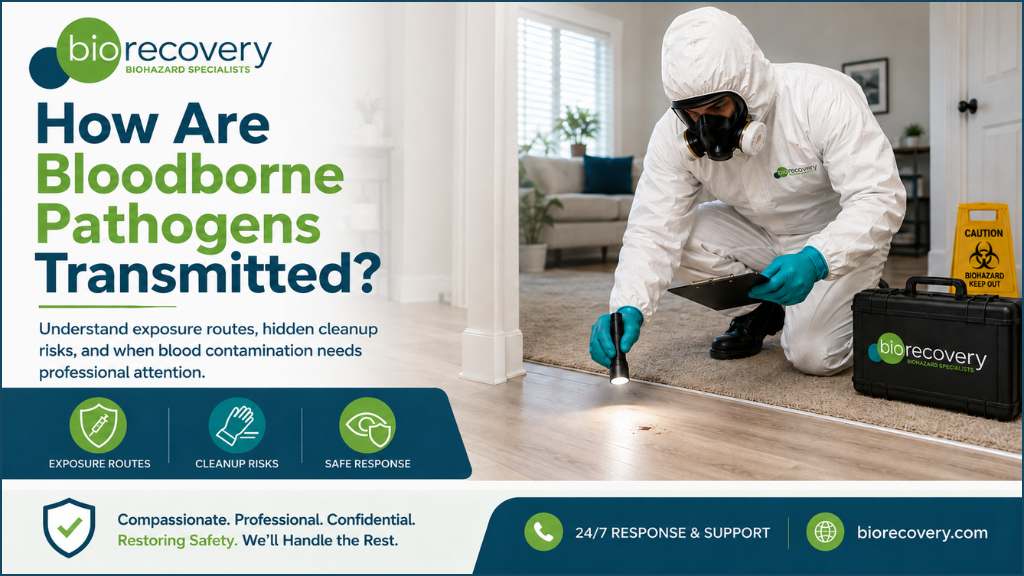
Blood can remain on a surface long after an injury, accident, or medical emergency ends. The danger doesn’t come from simply being near it. Exposure becomes possible when infected blood or another potentially infectious material finds a way into your body.
So, how are bloodborne pathogens transmitted? They can spread through contaminated sharps, damaged skin, or contact with the eyes, nose, or mouth. The type of fluid, condition of the surface, and way you handle contaminated materials all affect the possibility of exposure.
Knowing these risks helps you avoid common cleanup mistakes and respond correctly if contact occurs. When blood has soaked into porous materials, spread beyond one area, or may conceal sharps, professional bloodborne pathogen cleanup can address contamination that ordinary surface cleaning may leave behind.
What Are Bloodborne Pathogens?
Bloodborne pathogens are microorganisms carried in human blood that can cause disease. The most commonly discussed bloodborne pathogens are hepatitis B virus, hepatitis C virus, and human immunodeficiency virus.
Hepatitis B Virus
Hepatitis B virus, or HBV, infects the liver and can cause either a short-term illness or a chronic infection. Vaccination offers protection against hepatitis B, but unvaccinated people can remain vulnerable after an exposure.
Hepatitis C Virus
Hepatitis C virus, or HCV, also affects the liver. It spreads when infected blood enters the body of someone who doesn’t have the infection, including through microscopic amounts of blood.
There is no vaccine for hepatitis C. Prevention depends on avoiding contact with infected blood and responding correctly when an exposure occurs.
Human Immunodeficiency Virus
Human immunodeficiency virus, or HIV, attacks the immune system. Occupational transmission is uncommon, but contaminated sharps and direct blood contact with vulnerable tissue still require immediate medical evaluation.
HIV post-exposure prophylaxis, known as PEP, must begin within 72 hours of a possible exposure. The CDC stresses that starting sooner provides better protection.
How Are Bloodborne Pathogens Primarily Transmitted?
Bloodborne pathogens are primarily transmitted through contaminated sharps, damaged skin, and the mucous membranes of the eyes, nose, or mouth. These exposure routes can occur in healthcare facilities as well as homes, vehicles, workplaces, public buildings, and rental properties.
1. Punctures From Needles and Other Sharps
A contaminated sharp can carry blood directly through the skin. Needles receive the most attention, but broken glass, razors, exposed metal, scalpels, and other pointed objects can create the same type of exposure.
Sharps can remain hidden under clothing, bedding, paper, carpet, or trash. Someone cleaning a scene may reach into a pile or press down on a bag without realizing that a contaminated object is inside.
2. Contact With Broken or Damaged Skin
Infected blood can enter through cuts, scrapes, burns, sores, rashes, or other damaged areas of skin. Even a small crack around a fingernail may create a possible entry point.
For example, imagine that you wipe blood from a floor while wearing a glove with a small tear. If you also have a cut underneath that glove, the contact requires medical evaluation.
Intact skin provides a strong barrier. Blood touching healthy, unbroken skin is different from blood entering an open wound, although you should still wash exposed skin promptly.
3. Contact With the Eyes, Nose, or Mouth
The CDC identifies the eyes, nose, and mouth as possible routes of occupational blood exposure. Splashes and contaminated hands are common ways infected blood can reach these mucous membranes.
You could transfer blood to your face without realizing it while removing gloves or moving contaminated items. Forceful scrubbing can also produce droplets that reach an unprotected face.
What Conditions Must Exist for Transmission?
The presence of blood doesn’t automatically mean transmission occurred. An infectious material must reach a viable entry point, such as a puncture wound, damaged skin, or a mucous membrane.
Exposure also doesn’t mean that infection definitely occurred. The source material, type of contact, amount involved, affected body area, and medical response all influence the outcome.
A healthcare professional must evaluate an actual exposure. A cleanup team can address environmental contamination, but we cannot determine whether you acquired an infection.
Which Body Fluids Can Carry Bloodborne Pathogens?
Human blood presents the clearest bloodborne pathogen concern. Certain other body fluids can also qualify as potentially infectious materials, especially in occupational settings.
These materials include:
- Semen and vaginal secretions
- Cerebrospinal fluid surrounding the brain and spinal cord
- Synovial fluid found around joints
- Pleural fluid surrounding the lungs
- Pericardial fluid surrounding the heart
- Peritoneal fluid in the abdomen
- Amniotic fluid
- Any body fluid visibly contaminated with blood
- Human tissue that has not been chemically fixed
Saliva, urine, vomit, sweat, tears, feces, and nasal secretions aren’t generally treated as bloodborne transmission sources unless they contain visible blood. These materials may carry other biological hazards, so that distinction doesn’t make every bodily fluid spill safe to handle.
Can Dried Blood Transmit Bloodborne Pathogens?
Yes, dried blood can remain an exposure concern because drying doesn’t immediately make every bloodborne pathogen inactive. The length of time a pathogen remains infectious varies by organism and environmental conditions.
Hepatitis B is a clear example. The CDC reports that HBV can remain infectious on environmental surfaces for at least seven days, which means an older bloodstain shouldn’t be treated as harmless based only on its appearance.
Dried blood becomes more concerning when cleanup exposes a cut, produces a splash, or involves a concealed sharp. Its age and appearance alone cannot confirm that it is safe to handle.
Avoid brushing, sanding, vacuuming, or aggressively scrubbing dried blood. These actions can transfer contaminated material to tools, clothing, hands, and nearby surfaces.
How Bloodborne Pathogens Can Be Transmitted During Cleanup
Improper cleanup can create new contact with blood even after the original incident has ended. The person handling the spill may face more exposure than someone who simply saw or walked near it.
Common cleanup-related exposures include:
- Handling blood-soaked materials while cuts remain uncovered
- Touching your face, phone, or a doorknob with contaminated gloves
- Carrying blood into another area on shoes or reusable equipment
- Compressing trash bags or moving clutter that may conceal sharps
Gloves reduce direct contact, but gloves alone don’t control every hazard. Eye protection, protective clothing, safe sharps handling, containment, and careful glove removal may also be necessary.
In workplaces where employees may encounter blood, bloodborne pathogens cleanup rules also affect training, protective equipment, exposure control, and the handling of contaminated materials.
Porous and Nonporous Surfaces Create Different Problems
Nonporous surfaces keep most contamination near the surface, while porous materials allow blood to travel below what you can see. That difference affects how the contaminated area must be assessed.
| Surface type | Examples | Main cleanup issue |
|---|---|---|
| Hard and nonporous | Metal, tile, sealed counters | Visible residue and correct disinfection |
| Soft and porous | Carpet, upholstery, mattresses | Blood may soak below the surface |
| Structural | Drywall, subflooring, unfinished wood | Hidden contamination may require removal |
| Mixed or complex | Vehicles, furniture, machinery | Seams and internal spaces can conceal blood |
Color removal doesn’t prove that a surface has been decontaminated. Knowing how to disinfect blood safely requires removing visible material, choosing a suitable disinfectant, and following the product’s required contact time.
How Are Bloodborne Pathogens Not Transmitted?
Bloodborne pathogens don’t spread through ordinary social contact. You cannot contract HIV, HBV, or HCV simply by standing near a blood spill or sharing a room with someone who has one of these infections.
Bloodborne pathogens are generally not transmitted through:
- Coughing or sneezing
- Shaking hands or hugging
- Sharing toilets or water fountains
- Touching an infected person’s intact skin
- Using the same room or office
- Looking at or smelling blood
- Blood contacting healthy, unbroken skin
A bloodstain may require cleanup, but HIV, HBV, and HCV don’t spread through shared air or casual proximity.
What Should You Do After Possible Blood Exposure?
Treat a possible blood exposure as time-sensitive. Immediate washing and prompt medical evaluation can affect the options available after contact.
Follow these steps:
- Wash cuts and needlestick injuries with soap and water.
- Flush blood from your nose or mouth with clean water.
- Rinse exposed eyes with clean water, saline, or a sterile irrigating solution.
- Remove contaminated clothing without spreading blood to your face or skin.
- Report workplace exposures immediately when applicable.
- Seek medical care as soon as possible.
Don’t scrub a wound aggressively, pour bleach onto your skin, or attempt to diagnose the risk yourself. Tell the medical professional how the exposure occurred, what part of your body was affected, and when it happened.
The CDC advises immediate care after needlesticks, sharps injuries, and blood contact with vulnerable tissue. It also explains when post-exposure treatment may be considered.
How Can You Reduce Bloodborne Pathogen Exposure?
The most effective approach prevents contact before cleanup begins. Isolate the area, keep other people away, and don’t handle blood or hidden objects without understanding the hazards.
Basic exposure controls include:
- Cover cuts before approaching the affected area
- Wear protective equipment suited to the exposure risk
- Never compress bags or reach blindly into contaminated materials
- Keep contaminated tools and footwear away from clean areas
- Follow disinfectant label instructions, including contact time
- Wash your hands immediately after removing gloves
- Follow applicable waste-disposal requirements
Workplaces need a more formal approach. The OSHA Bloodborne Pathogens Standard covers exposure control plans, training, work practices, personal protective equipment, hepatitis B vaccination, and post-exposure procedures for employees with occupational exposure.
When Does Blood Contamination Require Professional Cleanup?
Professional cleanup should be considered when blood contamination extends beyond a small, controlled surface spill. Large amounts, unknown sources, hidden sharps, porous materials, structural contamination, and trauma scenes create risks that ordinary household cleaning cannot fully address.
You should avoid entering or disturbing an affected area when:
- Blood has soaked into carpet, padding, furniture, or a mattress
- Needles, broken glass, or other sharps may be present
- Contamination follows a suicide, crime, unattended death, or serious injury
- Blood has spread through several rooms or into a vehicle
Bio Recovery assesses visible and hidden contamination in residential, commercial, industrial, and vehicle environments. Our process focuses on containment, removal, disinfection, cross-contamination control, and regulated disposal where required.
Key Takeaways: How Are Bloodborne Pathogens Transmitted?
Understanding how bloodborne pathogens are transmitted helps you distinguish between the presence of blood and an actual exposure. Keep these points in mind:
- Transmission requires infected material to enter the body through a viable route.
- Contaminated sharps, damaged skin, and mucous membranes create the primary exposure routes.
- Dried blood and hidden contamination still require careful handling.
- Porous materials may hold blood below the visible surface.
- Improper cleanup can transfer contamination to your hands, clothing, tools, or nearby areas.
- Possible exposure requires prompt medical evaluation.
When blood has soaked into materials, spread beyond one area, or may conceal sharps, avoid disturbing the scene. Bio Recovery Biohazard Specialists can assess the contamination, prevent further exposure, and determine what the affected environment needs. Contact our team for immediate guidance and professional cleanup support.
Frequently Asked Questions
What are the three ways bloodborne pathogens are transmitted?
The three primary occupational exposure routes are punctures from contaminated sharps, contact with broken skin, and contact with the mucous membranes of the eyes, nose, or mouth. Each route allows infected blood or another potentially infectious material to enter the body.
What are the most commonly transmitted bloodborne pathogens?
Hepatitis B, hepatitis C, and HIV are the three bloodborne pathogens most often addressed in workplace safety guidance. Other microorganisms can be carried in blood, but these viruses receive the most attention because of their health effects and exposure risks.
Can bloodborne diseases spread through saliva?
Saliva isn’t generally considered a bloodborne transmission source unless it contains blood. Other infections can spread through saliva, so the absence of a bloodborne pathogen risk doesn’t make all saliva exposure harmless.
What is the most common route of occupational exposure to bloodborne pathogens?
Percutaneous exposure, particularly a needlestick or injury from another contaminated sharp, is the primary occupational route of concern. Blood contact with broken skin or the eyes, nose, and mouth can also create an exposure.