



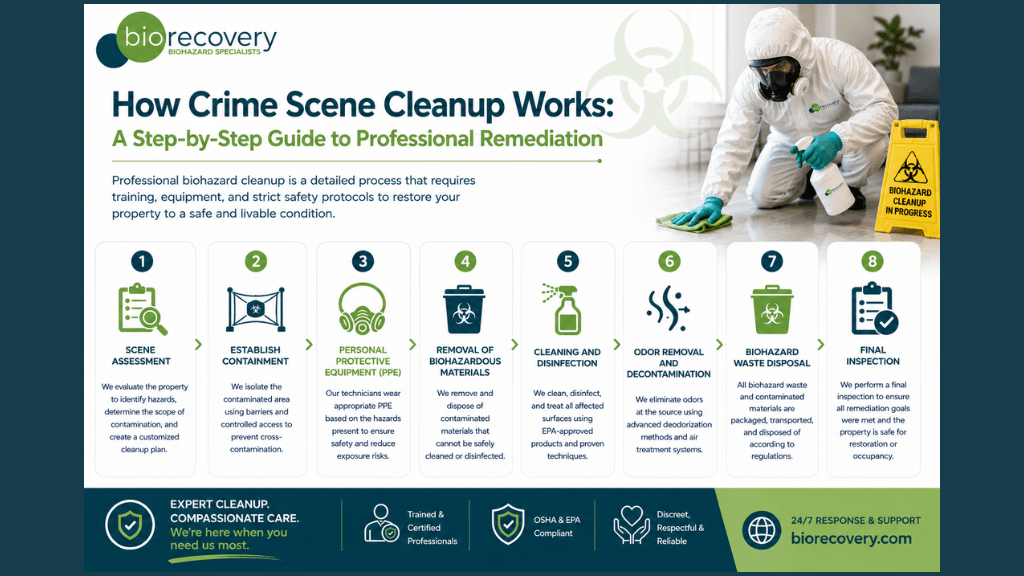
Have you ever wondered how crime scene cleanup works? It involves safely removing blood, bodily fluids, and other potentially hazardous biological materials from a property after law enforcement has completed its investigation. Professional biohazard remediation technicians follow a structured biohazard cleanup process to assess the scene, contain contaminated areas, remove affected materials, disinfect surfaces, dispose of regulated waste, and restore the property to a safe condition.
While television often focuses on the investigation itself, the cleanup process begins only after authorities release the scene and can involve extensive remediation depending on the severity of contamination.
What Is Crime Scene Cleanup?
Crime scene cleanup is a specialized form of biohazard remediation that addresses contamination resulting from:
- Homicides
- Suicides
- Unattended deaths
- Violent assaults
- Accidental fatalities
- Traumatic injuries
The goal is not simply to clean visible blood or bodily fluids but to remove contamination that may pose health risks and restore the property to a safe, habitable condition.
How Is Crime Scene Cleanup Different from Standard Cleaning?
Unlike routine cleaning, crime scene remediation addresses biological contaminants that may pose health risks. Understanding the dangers of biohazard exposure and following a professional biohazard cleanup process are essential for restoring a safe environment.
Who Performs Crime Scene Cleanup?
Crime scene cleanup is typically performed by trained biohazard remediation professionals.
These technicians receive training in:
- Bloodborne pathogen safety
- Personal protective equipment (PPE)
- Containment procedures
- Biohazard waste handling
- Decontamination methods
- Regulatory compliance
Law enforcement officers, medical examiners, and emergency responders generally do not perform the cleanup itself.
When Does Crime Scene Cleanup Begin?
A common misconception is that cleanup starts immediately after an incident occurs.
In reality, professional remediation usually begins only after:
- Law enforcement completes its investigation
- Evidence collection is finished
- The property is officially released
Once the scene is released, cleanup professionals can begin remediation efforts.
How Crime Scene Cleanup Works: The Process
Step 1: Scene Assessment
The first step is a comprehensive evaluation of the property.
Technicians determine:
- Areas affected by contamination
- Types of biological hazards present
- Structural materials impacted
- Safety risks
- Scope of remediation required
This assessment helps create a cleanup plan tailored to the situation.
Step 2: Establish Containment
Before remediation begins, contaminated areas are isolated.
Containment may include:
- Restricted access zones
- Protective barriers
- Controlled work areas
- Measures to prevent cross-contamination
The purpose is to keep contamination from spreading to unaffected areas of the property.
Step 3: Personal Protective Equipment (PPE)
Technicians wear protective equipment based on the specific hazards present and follow established OSHA biohazard cleanup guidelines to reduce occupational exposure risks.
Depending on the situation, PPE may include:
- Disposable gloves
- Protective coveralls
- Eye protection
- Face shields
- Respiratory protection
- Shoe covers
PPE helps protect workers from potential exposure to biological hazards.
Step 4: Removal of Biohazardous Materials
The next step involves removing contaminated materials.
Examples may include:
- Blood-soaked carpeting
- Padding
- Upholstered furniture
- Drywall
- Insulation
- Other porous materials
In many situations, porous materials cannot be fully disinfected and must be removed.
Step 5: Cleaning and Disinfection
The cleaning phase often follows many of the same principles discussed in our guide on how to disinfect blood safely, although professional remediation frequently involves larger-scale contamination.
This process generally includes:
Removal of Visible Contamination
Any remaining biological material is carefully removed.
Surface Cleaning
Surfaces are cleaned to prepare them for disinfection.
Disinfection
Approved disinfectants are applied according to manufacturer guidelines.
Detailed Treatment
Adjacent surfaces and hidden contamination areas may also require treatment.
Step 6: Odor Removal and Decontamination
Certain scenes—particularly unattended deaths and decomposition cases—require additional odor remediation.
Odor treatment may involve:
- Deep cleaning procedures
- Specialized deodorization techniques
- Air treatment systems
- Surface treatment
The goal is to eliminate odors at their source rather than simply masking them.
Step 7: Biohazard Waste Disposal
All contaminated materials must be disposed of properly.
Examples include:
- Biohazard waste
- Contaminated PPE
- Disposable cleanup materials
- Removed building materials
Waste disposal follows applicable regulations for handling potentially infectious materials. Proper transportation and disposal of regulated waste can be a factor affecting overall biohazard cleanup cost, particularly in larger remediation projects.
Step 8: Final Inspection
Before a project is completed, technicians perform a final review of the work.
The inspection confirms:
- Cleanup objectives were completed
- Contaminated materials were removed
- Affected areas were remediated
- The property is ready for restoration or occupancy
How Long Does Crime Scene Cleanup Take?
The time required depends on the extent of contamination.
| Situation | Typical Timeframe |
| Small blood cleanup | Several hours |
| Single-room trauma scene | 1 day |
| Moderate crime scene cleanup | 1–2 days |
| Unattended death cleanup | 1–3 days |
| Advanced decomposition cleanup | Several days |
| Large-scale contamination | Multiple days or longer |
Each situation is unique, and timelines vary based on property conditions and contamination severity.
What Factors Affect Crime Scene Cleanup?
Several factors influence the complexity of a cleanup project.
Amount of Biological Contamination
More extensive contamination generally requires additional labor and remediation.
Type of Surfaces Affected
Hard surfaces are often easier to remediate than porous materials such as carpet and drywall.
Time Before Discovery
Delayed discovery may increase contamination and odor issues.
Structural Damage
Cleanup becomes more involved when biological materials penetrate flooring, walls, or subfloor systems.
Why Professional Crime Scene Cleanup Is Important
Crime scene cleanup involves more than cleaning visible evidence.
Professional remediation helps:
- Address potential health risks
- Remove biological contamination
- Prevent cross-contamination
- Support proper waste disposal
- Restore safe living conditions
In many cases, hidden contamination can remain even after visible materials are removed.
Common Misconceptions About Crime Scene Cleanup
“The Police Clean the Scene”
Law enforcement secures and investigates the scene but generally does not perform remediation.
“Visible Blood Is the Only Concern”
Contamination can spread beyond what is visible and may affect porous materials or hidden areas.
“Household Cleaners Are Enough”
Standard cleaning products may not address all biohazard concerns or contamination risks.
“The Cleanup Is Always Quick”
Some projects require significant remediation, demolition, and restoration work.
Who Pays for Crime Scene Cleanup?
Many property owners are surprised to learn that crime scene cleanup expenses may be covered by insurance depending on the circumstances of the incident.
Common payment sources include:
- Homeowners insurance
- Property insurance
- Victim assistance programs
- Private payment
Frequently Asked Questions
How does crime scene cleanup work?
Crime scene cleanup works through a structured process that includes assessment, containment, removal of contaminated materials, cleaning, disinfection, waste disposal, and final verification.
Who is responsible for cleaning a crime scene?
After authorities release the property, the responsibility for arranging cleanup generally falls to the property owner, family, landlord, or responsible party.
How long does crime scene cleanup take?
The process can take several hours to several days depending on the severity of contamination and the size of the affected area.
Is crime scene cleanup covered by insurance?
In many situations, homeowners insurance may help cover biohazard remediation costs, depending on policy terms and the circumstances of the incident.
What happens to contaminated materials?
Contaminated materials are removed, packaged, and disposed of according to applicable regulations.
Can a homeowner clean a crime scene?
While some minor incidents may appear manageable, significant biological contamination often requires professional remediation to address health and safety concerns.
Key Takeaways
- Crime scene cleanup begins after law enforcement releases the property.
- The process involves assessment, containment, material removal, cleaning, disinfection, waste disposal, and final inspection.
- Professional remediation addresses both visible and hidden contamination.
- Cleanup timelines vary depending on the extent of contamination and structural impact.
- Proper remediation helps restore safe conditions for occupants and property owners.