


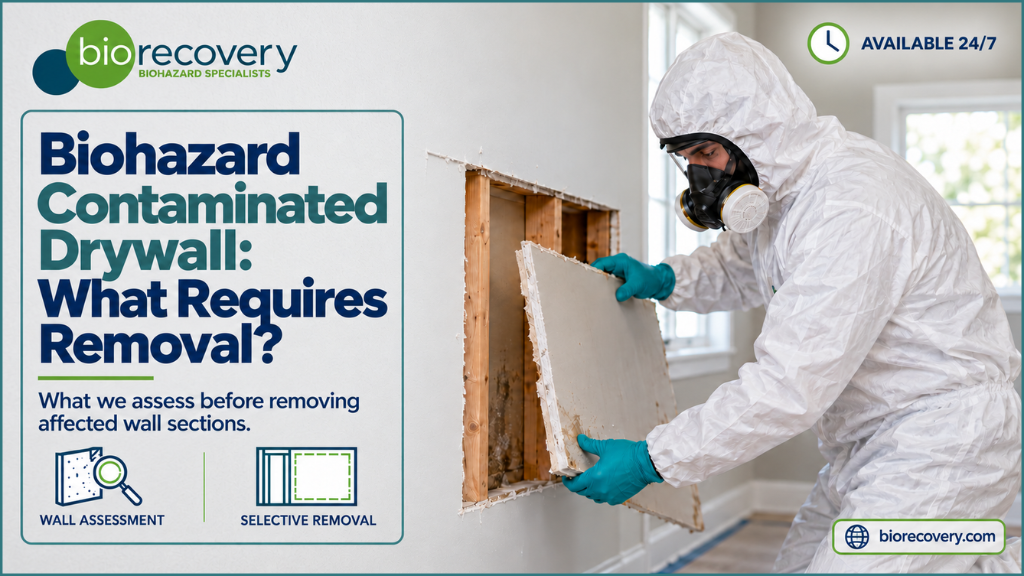
Biohazard contaminated drywall needs removal when biological material penetrates layers that we cannot adequately clean and disinfect. An intact painted surface may remain in place when we can confirm that contamination stayed on a finish suitable for treatment.
Our biohazard cleaning services include assessing affected building materials to determine the cleanup scope. We explain which sections need removal so you can arrange repairs after we address the contamination.
When Does Biohazard Contaminated Drywall Need Removal?
We remove drywall when contamination reaches material we cannot adequately decontaminate or leaves it too damaged for effective treatment. Drywall usually has paper facing around a gypsum core, so its exposed edges and damaged areas require particular attention.
Use these conditions to understand how the wall’s condition affects the decision.
| Condition | Removal decision | What we need to establish |
|---|---|---|
| Blood remains on an intact painted coating | Cleaning in place may be appropriate | Whether the coating stayed intact and supports disinfection |
| Biological fluids enter torn paper or exposed drywall | Remove material we cannot adequately decontaminate | How far contamination penetrated |
| Sewage or floodwater contaminates drywall | Remove affected drywall and contaminated insulation under CDC guidance. | The extent of contact along and behind the wall |
| Mold grows within porous drywall layers | Remove material we cannot adequately clean | The depth of growth and moisture damage |
| Contaminated drywall becomes soft or deteriorated | Remove sections that cannot support effective treatment | Where sound, unaffected material begins |
How Much Drywall Needs Removal?
We remove the affected sections and create enough access to address the full extent of contamination. The visible stain does not set the only cutting line, and one standard removal height does not fit every incident.
The initial assessment in our biohazard cleanup process establishes the affected materials and the planned work area. For drywall, these findings help define the scope:
- Direct contact. We identify which wall surfaces were in contact with blood or another biological material.
- Entry points. We check damaged finishes and gaps where fluid could reach the board or enter behind trim.
- Concealed materials. When inspection requires an opening, we assess accessible insulation and framing for additional contamination.
- Extent of damage. We determine whether selective removal provides sufficient access or whether larger sections need to come out.
- Additional findings. We explain newly exposed contamination and discuss changes before expanding the agreed work.
Does the Entire Wall Need Replacement?
Not always. Selective removal works when we can identify the contamination boundary and adequately address the exposed area without replacing every panel.
The repair opening can also extend beyond the contaminated section to allow installation of replacement board. Ask us to distinguish material we removed for contamination from any additional opening the repair work requires.
What Products Can Disinfect Biohazard Contaminated Drywall?
We use disinfectants whose labels cover the identified hazard and the surface we plan to treat. A product suitable for a cleanable painted finish does not automatically reach absorbed contamination inside the board.
For surfaces we retain, product selection follows the cleaning requirements:
- Remove biological residue first so it does not interfere with treatment.
- Match the product’s listed uses to the identified hazard.
- Confirm that the application suits the surface and coating.
- Follow the label’s directions, including how long the surface must remain wet.
Can Bleach or Primer Replace Drywall Removal?
No. Bleach or primer cannot replace removal when contamination remains inside material we cannot adequately decontaminate. Primer conceals marks, while disinfectants work according to their approved uses and application instructions.
Effective biohazard decontamination requires addressing the affected material, including contamination beneath the visible finish. We base the treatment decision on that requirement rather than choosing a product first.
Avoid repeatedly soaking the board in an attempt to disinfect it. Adding liquid does not demonstrate that treatment reached the contamination and can further damage the material.
Is Black Mold on Drywall a Health Hazard?
Yes, indoor mold growth can present a health concern, but black color alone does not establish greater danger. The CDC’s mold guidance explains that color does not indicate whether mold is more or less dangerous.
For the removal decision, we focus on the growth’s location and the wall’s condition. A species name or color does not establish whether cleaning the surface will address the affected layers.
When Does Mold Require Drywall Removal?
Mold within porous material can require removal because cleaning cannot always reach the growth. The EPA’s mold cleanup recommendations explain that mold can grow within porous materials and become difficult or impossible to remove completely.
The same guidance advises against painting over mold and calls for fixing the moisture problem. We account for the source of dampness when planning the work so replacement drywall does not cover an unresolved leak.
Does Odor Mean Drywall Needs Removal?
No. Odor alone does not establish that drywall needs replacement. A musty smell can prompt a moisture investigation, while odor after an unattended death requires checking for remaining sources in affected materials.
We assess where the odor originates before including a wall in the removal scope. The smell may come from another part of the room, even when you notice it near a wall.
Describe the odor and when you first noticed it when you contact us. Avoid masking it with fragrances before we assess the source.
How Do We Safely Remove Biohazard Contaminated Drywall Sections?
We establish a controlled work area and remove affected sections with precautions matched to the exposure. The property’s layout also determines how we protect shared access during the work.
The sequence generally includes these steps:
- Prepare the work area. We confirm access arrangements and identify utilities or other conditions that affect opening the wall. We choose protective equipment for the exposure.
- Establish boundaries. We use biohazard containment zones to separate active work from unaffected spaces and control entry. Shared hallways and occupied adjoining rooms influence the setup.
- Remove the affected sections. We limit unnecessary breakage and use dust control appropriate to the work. As the cavity opens, we check the materials that the board previously concealed.
- Contain debris before moving it. We manage waste containers and used equipment to prevent biohazard cross contamination along the removal route. Clean supplies stay separate from items that have entered the affected area.
- Treat retained surfaces. We remove remaining biological material and clean accessible surfaces. We disinfect suitable materials using the method selected for the contamination.
- Review the work area. We compare the completed work with the agreed scope and discuss any remaining limitations. That review establishes the next step before repairs.
Can You Dispose of Biohazard Contaminated Drywall in Regular Trash?
Contaminated drywall belongs in regular trash only when the applicable waste rules and receiving facility allow it. We confirm the disposal route before moving removed material into any waste stream.
The EPA explains that medical waste rules primarily come from state environmental and health departments. Biological contamination does not automatically make every removed panel medical waste or federally classified hazardous waste.
We address disposal through the project plan, including:
- Classifying the removed material according to the applicable rules.
- Selecting packaging that contains the debris during handling.
- Arranging transport appropriate to the waste category.
- Confirming that the receiving facility accepts the material.
For commercial properties, tell us about any existing waste arrangements before work begins. An ordinary building waste contract does not by itself establish permission to discard contaminated building materials.
What Determines the Cost of Biohazard Drywall Remediation?
The affected area and the required cleanup determine the price. We provide a project estimate after assessing those conditions, since ordinary drywall removal pricing does not account for all the tasks involved in handling biological contamination.
The cost of biohazard cleanup reflects the scope of remediation, including these project variables:
| Cost factor | What affects the work | What to clarify in the estimate |
|---|---|---|
| Removal area | Number and size of affected sections | Which walls and rooms the quote covers |
| Concealed contamination | Treatment or removal behind the board | How we price additional findings |
| Site access | Containment and protected removal routes | Which access restrictions affect the work |
| Waste disposal | Waste category and volume | Whether handling and disposal fees are included |
| Remaining surfaces | Cleaning or treatment after removal | What work the quote includes inside the opening |
Does the Estimate Include Replacement Drywall?
Only if your agreement specifically includes reconstruction. Installing replacement board and restoring the painted finish involve separate work from removing contaminated material.
If you plan to submit an insurance claim, ask what documentation your insurer requires before approving the work. We can provide information about the proposed cleanup, but your insurer determines coverage.
What Needs to Happen Before Drywall Replacement?
Repair planning after biohazard remediation should follow the completed cleanup and any remaining restrictions. An open wall can indicate finished material removal while still requiring reconstruction before normal use.
Before replacement begins, confirm these points with us:
- Completion of treatment. Understand which accessible surfaces we treated and whether any part of the agreed cleanup remains unfinished.
- Moisture conditions. Resolve an active leak or dampness that affects the repair area.
- Remaining limitations. Clarify inaccessible areas or separate damage outside the cleanup agreement.
- Repair responsibilities. Establish who will complete reconstruction and when the room can return to use.
Keep the completion records with the repair estimate. Clear documentation helps you coordinate the work without relying on the appearance of the unfinished opening.
Get Help With Biohazard Contaminated Drywall
Biohazard contaminated drywall requires a removal plan based on the affected material and the extent of contamination. The assessment should explain what needs to come out and what treatment the remaining surfaces require.
Bio Recovery Biohazard Specialists can assess your wall and discuss the cleanup scope before you arrange repairs. If you need help with affected drywall, reach out to us.
Frequently Asked Questions
Should I cut out contaminated drywall before the assessment?
No. Leave affected drywall in place until we assess the work area. Cutting or sanding can disturb contaminated material, so keep routine maintenance work away from that section until we establish the removal plan.
Does dried blood still require drywall cleanup?
Yes. Dryness does not establish that earlier fluid contact stayed on the surface, so we assess the wall before deciding whether cleaning or removal is appropriate.
Can a moisture meter detect biohazard contamination?
No. A moisture meter helps assess moisture in a material, but it does not detect bloodborne pathogens or verify that drywall is free of biological contamination.
Can I stay in the property during drywall removal?
You can remain only when we can maintain appropriate separation from the work. We explain access restrictions before cleanup, including any effect on shared entrances.
How long does biohazard drywall remediation take?
The removal area and findings behind the wall determine the cleanup schedule. Drying and reconstruction can add time before you can use the room normally, so ask for separate expectations for cleanup completion and your return to the space.