



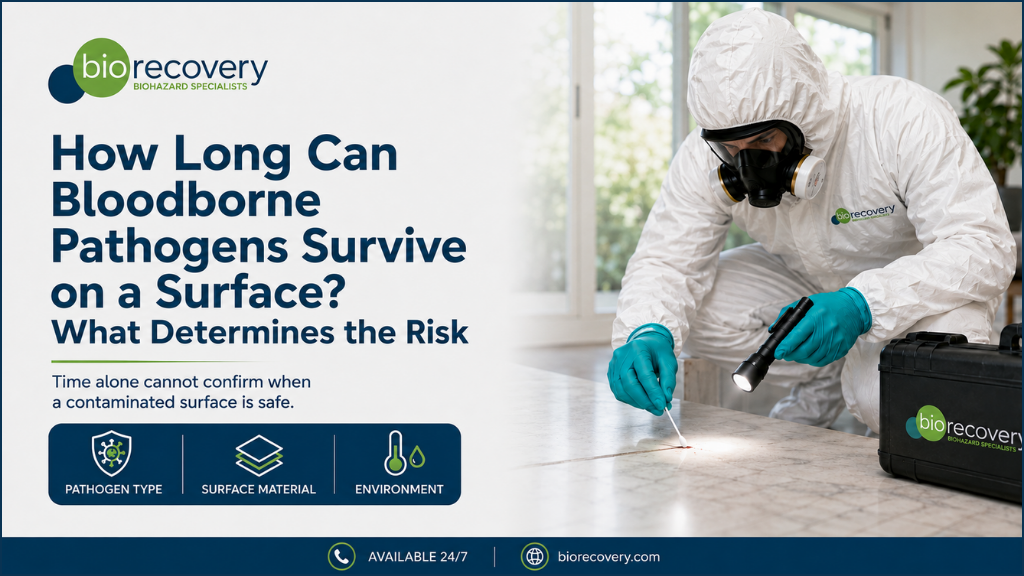
Blood can dry within minutes, but drying does not make every pathogen inactive. Depending on the virus and surrounding conditions, infectious material can remain on a surface for days or weeks.
Do not wait for contaminated blood to become harmless. Treat it as potentially infectious until it has been removed and the affected area has been cleaned and disinfected. When blood has soaked into materials, spread beyond one surface, or followed a traumatic event, professional blood cleanup can address contamination that an ordinary wipe may leave behind.
How Long Can Bloodborne Pathogens Survive on a Surface?
Bloodborne pathogens do not share one survival time. Current CDC guidance provides these pathogen-specific benchmarks.
| Bloodborne pathogen | Reported surface survival | Practical meaning |
|---|---|---|
| Hepatitis B virus, or HBV | At least 7 days | Dried or invisible blood may remain infectious |
| Hepatitis C virus, or HCV | Up to 6 weeks under certain conditions | Persistence varies with the setting and surface conditions |
| Human immunodeficiency virus, or HIV | Does not survive long outside the body | An unknown blood spill still requires precautions |
These figures are reference points, not expiration dates. You usually do not know which pathogen is present, and a surface does not become proven safe when a stated period ends.
What Determines How Long Bloodborne Pathogens Live on Surfaces?
The pathogen is only one part of the answer. The amount of blood and the surrounding environment also affect how long infectious material may persist.
- Pathogen type: HBV, HCV, and HIV have different levels of stability outside the body.
- Blood volume: A thin smear dries differently from a pool that remains moist in a crack or protected space.
- Temperature and moisture: Environmental conditions can speed or slow the loss of infectivity.
- Light and exposure: Open, well-lit areas affect contamination differently than dark, protected seams.
These factors interact, so the age, color, or texture of dried blood cannot confirm whether it remains infectious. Surface material creates an additional issue because it determines where the blood can travel.
How Surface Material Changes Blood Contamination
Blood stays accessible on some surfaces and penetrates others. The material therefore affects the cleanup method more directly than it changes the pathogen’s basic survival benchmark.
| Surface type | Common examples | Main cleanup concern |
|---|---|---|
| Smooth, nonporous | Sealed plastic, glass, metal, tile | Blood may remain in seams, scratches, or edges |
| Textured or jointed | Plastic chairs, equipment, grouted tile | Wipes may miss recessed areas |
| Porous | Fabric, carpet, upholstery, unfinished wood | Blood can absorb below the visible surface |
| Building material | Drywall, flooring, subflooring | Contamination may require material removal |
How Long Can Bloodborne Pathogens Survive on Plastic Surfaces?
Plastic does not have a separate universal survival time. Smooth plastic usually keeps blood near the surface, while seams, hinges, scratches, and textured areas can hold material that a quick wipe misses.
How Long Do Bloodborne Pathogens Stay Active on Fabric?
Fabric does not have one reliable timeline either. Its fibers can carry blood below the visible stain, making complete cleaning and disinfection harder than on a sealed surface.
A washable garment with a small spot presents a different problem from a blood-soaked mattress, carpet, sofa, or vehicle seat. Deeply absorbed contamination may require specialized treatment or removal of the affected material.
Does Surface Survival Mean Someone Can Become Infected?
No. A pathogen remaining infectious does not mean that standing near a surface will cause an infection. Contaminated blood must reach an entry point into the body.
The primary exposure routes are:
- A needlestick or cut from a contaminated sharp
- Contact with broken, scraped, or damaged skin
- A splash into the eyes, nose, or mouth
- Transfer from a contaminated hand, glove, tool, or object to one of these entry points
Touching dried blood with intact skin is not the same as a needlestick. However, small cuts can be easy to miss, and unprotected handling can move contamination to your face or another object.
Knowing how bloodborne pathogens are transmitted helps distinguish a true exposure route from simple proximity. It also explains why people should not walk through the area or move affected items before the contamination is contained.
How to Clean and Disinfect Blood on a Surface
Cleaning removes blood and other material. Disinfection treats a suitable surface after visible contamination has been removed.
For a limited spill that you are trained and equipped to handle, follow this general order:
- Keep unprotected people away from the area.
- Check for needles, broken glass, and other sharps.
- Put on PPE suited to the spill volume and splash risk.
- Remove visible blood without spreading it to clean areas.
- Apply an appropriate disinfectant according to its label.
- Keep the surface wet for the full listed contact time.
- Package and dispose of contaminated materials under applicable requirements.
- Remove PPE carefully and wash your hands.
This sequence does not make a large, absorbed, or trauma-related scene suitable for self-cleanup. The surface, PPE, product label, and extent of contamination determine how to disinfect blood safely.
What Disinfectants Kill Bloodborne Pathogens on Surfaces?
Use an EPA-registered disinfectant whose label covers the relevant pathogen claim and surface. “Antibacterial” or “hospital grade” alone does not confirm that a product is appropriate for every bloodborne virus.
Check the label for:
- Covered pathogens
- Approved surface types
- Required precleaning
- Dilution and application directions
- Wet contact time
- Ventilation and PPE precautions
Wet contact time is the period the treated surface must remain visibly wet. Follow the exact label, and never mix bleach with ammonia, acids, or other cleaners because the combination can release dangerous gases.
What Are the OSHA Bloodborne Pathogen Rules?
OSHA’s Bloodborne Pathogens Standard applies when employees have occupational exposure to blood or other potentially infectious materials. Employers must control that exposure rather than assign cleanup to untrained workers without safeguards.
Depending on the workplace and job duties, required protections can include:
- A written exposure control plan
- Universal precautions and appropriate PPE
- Employee training and eligible hepatitis B vaccination
- Procedures for sharps, regulated waste, and contaminated surfaces
- Post-exposure evaluation and follow-up
OSHA requires visibly contaminated work surfaces to be decontaminated with an appropriate disinfectant after a blood spill and as soon as feasible.
The standard addresses occupational exposure, so it does not make every private household spill an OSHA matter. Employers and property managers should understand their bloodborne pathogen cleanup responsibilities before asking an employee or contractor to enter the area.
When Does Blood Contamination Require Professional Cleanup?
Professional cleanup is appropriate when you cannot safely see, reach, contain, or discard all affected material. The visible stain does not always show the full extent of contamination.
Do not attempt cleanup without suitable training and equipment when:
- Blood covers a large area or appears in more than one room.
- It has soaked into carpet, padding, subflooring, drywall, furniture, or a vehicle interior.
- Needles, broken glass, or other sharps may be present.
- The scene follows a death, violent incident, or serious injury.
- Contaminated materials require regulated packaging or disposal.
- Employees, tenants, customers, or other occupants could be exposed.
Bio Recovery assesses visible blood and the materials it may have penetrated. We contain the affected area, remove material that cannot be restored, clean and disinfect suitable surfaces, and handle contaminated waste under applicable requirements.
Key Takeaways
How long can bloodborne pathogens survive on a surface? The exact period varies, but time alone never verifies that a contaminated area is safe.
- Pathogen type and environmental conditions affect surface survival.
- Porous materials can hold blood beneath the visible surface.
- Infection requires an exposure route, but improper handling can create one.
- Cleaning and disinfection perform different jobs.
- Complex or absorbed contamination may require professional remediation.
If blood has spread, soaked into materials, or created a risk you cannot safely control, contact Bio Recovery. We are available 24/7 to assess the affected area and explain the next appropriate step.
Frequently Asked Questions
Can hepatitis B live on surfaces for seven days?
Yes. Current CDC guidance states that HBV remains infectious on environmental surfaces for at least seven days, including when blood is no longer visible.
What is the survival time of HIV on environmental surfaces?
The CDC does not provide a single surface countdown for ordinary settings. It states that HIV does not survive long outside the human body or reproduce outside a human host.
Does dried blood still carry bloodborne pathogens?
It can. Drying does not immediately inactivate every pathogen, so visible dried blood should receive the same initial precautions as fresh blood.
What are the OSHA bloodborne pathogen rules?
For covered occupational exposure, OSHA requires an exposure control plan, universal precautions, protective controls, PPE, training, housekeeping procedures, and post-exposure follow-up.