


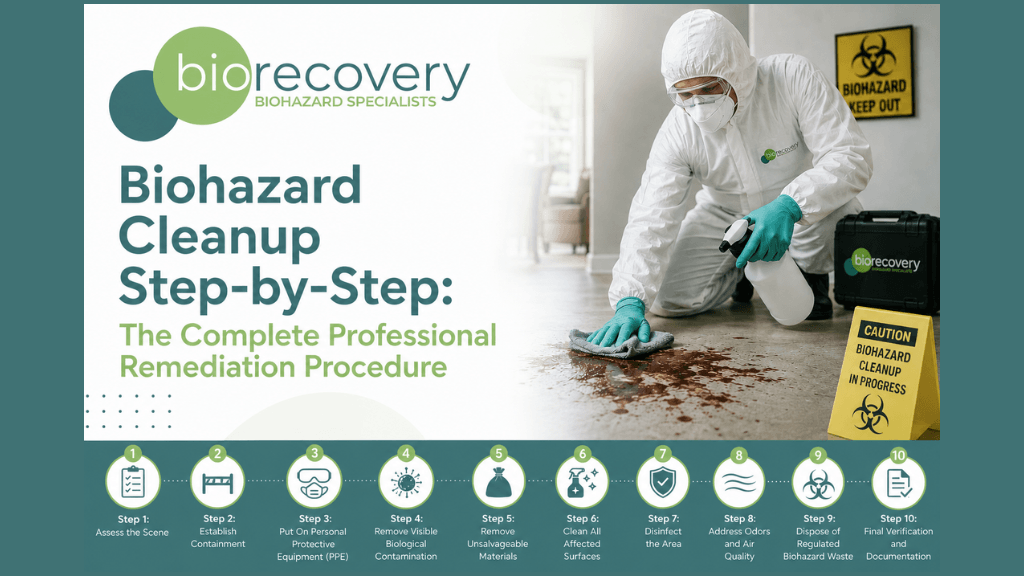
The biohazard cleanup process follows a structured series of steps that typically include scene assessment, containment, personal protective equipment (PPE), … Read More
What To Do After Finding A Dead Body?
Finding a deceased body is one of the most shocking experiences you can face. If you’re wondering what to do … Read More
Who Pays for Biohazard Cleanup? Understanding Financial Responsibility
Who Pays for Biohazard Cleanup? Who pays for biohazard cleanup depends on the circumstances of the incident, the type of … Read More
What Happens After Someone Dies at Home?
What happens after someone dies at home depends on whether the death was expected or unexpected. The next steps may … Read More
Dangers of Biohazard Exposure: Understanding the Health Risks of Biological Contamination
The dangers of biohazard exposure include potential contact with bloodborne pathogens, infectious bacteria, viruses, bodily fluids, and other hazardous biological … Read More
How Crime Scene Cleanup Works: A Step-by-Step Guide to Professional Remediation
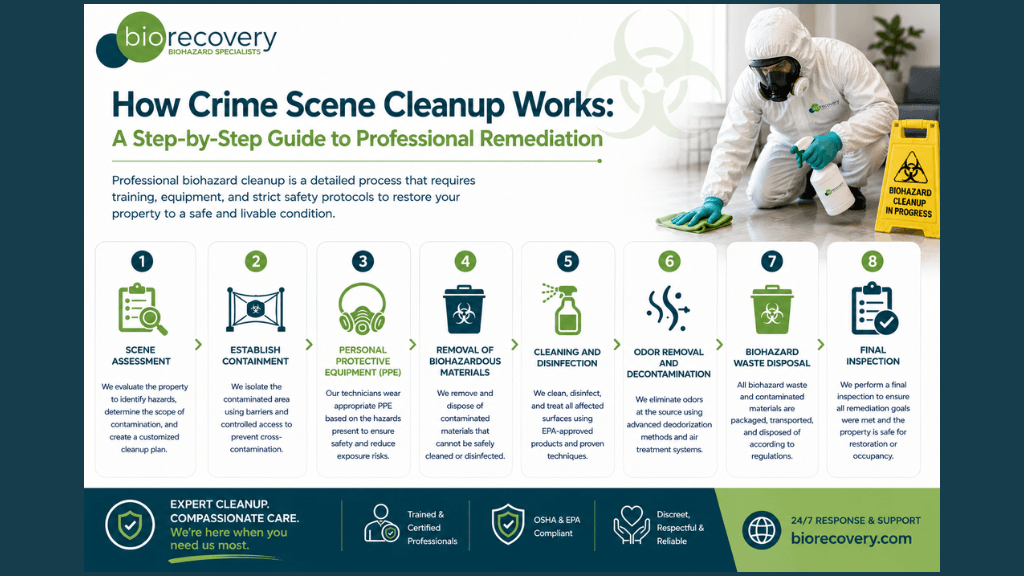
Have you ever wondered how crime scene cleanup works? It involves safely removing blood, bodily fluids, and other potentially hazardous … Read More
Who Is Responsible for Cleaning a Crime Scene?
When a crime scene is released by law enforcement, many people assume the police will handle the cleanup. That’s not … Read More
How to Disinfect Blood Safely: A Step-by-Step Guide
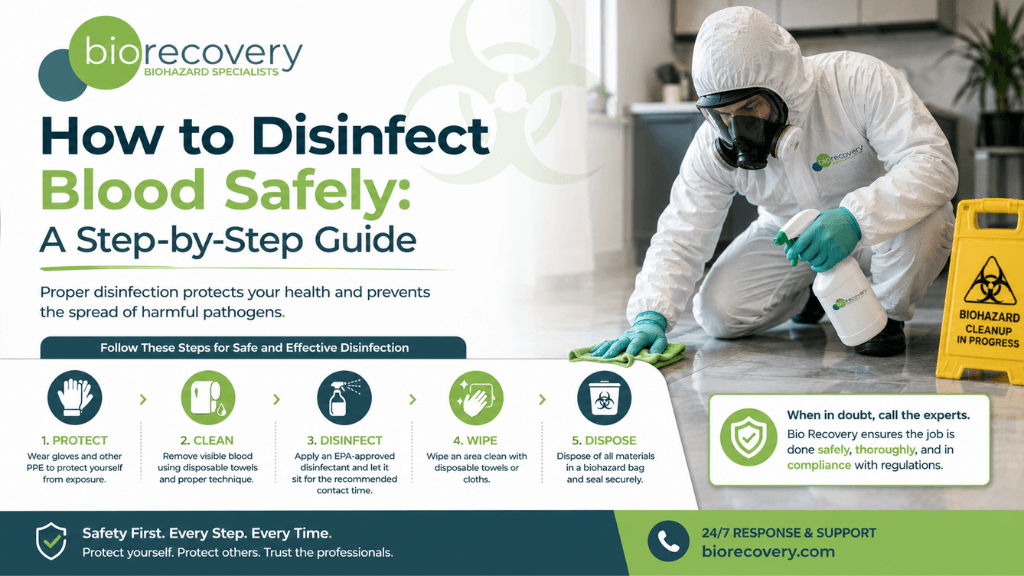
Blood should be disinfected using appropriate personal protective equipment (PPE), an EPA-registered disinfectant effective against bloodborne pathogens, and proper cleaning … Read More
How Professionals Clean Up Crime Scenes After Police Leave: Understanding the Process From Investigation to Restoration
When investigators finish collecting evidence and release a property, many people assume the scene is safe to enter again. In … Read More
Emergency Vehicle Decontamination for Biohazard Exposure: When a Vehicle Becomes a Health Risk

An emergency vehicle can carry more than patients, equipment, and responders. It can also carry bloodborne pathogens, bodily fluids, bacteria, … Read More